
Bible
Jesus and the Historical Method – Part 8
For the past several weeks, we have been investigating how the historical Jesus of Nazareth fares by being tested by the traditional historical method. Before wrapping up our investigation, NT scholar Michael Licona provides two additional tests that need to be considered. This article will investigate those two additional tests or methods and will offer some concluding thoughts on our quest.
1. Arguments to the Best Explanation.
Licona notes that the Arguments-to-the-Best-Explanation method “makes inferences and weighs hypotheses according to specific criteria.”[1] In other words, the data is compiled and examined according to a particular hypothesis made by the historian. The criteria include:
Explanatory scope: Examining the most relevant data according to the hypothesis.
Explanatory power: Looking at the “quality of the explanation of the facts.”[2]
Plausibility: How much confidence can the historian possess that a certain event took place? For the skeptic, if they are to be honest historically, they must suspend their skepticism, and allow for the possibility of the miraculous if they are to become unbiased.
Less ad hoc: Covering only what the data suggests without going “beyond what is already known.”[3]
Illumination: Where one piece of data strengthens other areas of inquiry.
Speaking of this method, Licona goes on to say that “Arguments to the best explanation are guided by inference and can sometimes be superior to an eyewitness to an event. Testimony to the court does not provide truth but data.”[4]
Examining the data that we have presented already when using this method demonstrates that the best historical explanation is that Jesus of Nazareth existed and walked out of the grave the first Easter Sunday. Licona, in his work The Resurrection of Jesus: A New Historiographical Approach , comes to the following conclusion in his over 600 page work:
“I am contending that Jesus’ resurrection from the dead is the best historical explanation of the relevant historical bedrock. Since it fulfills all five of the criteria for the best explanation and outdistances competing hypotheses by a significant margin in their ability to fulfill the same criteria, the historian is warranted in regarding Jesus’ resurrection as an event that occurred in the past.”[5]
Thus, from using this method, Jesus’ historicity as well as Jesus’ resurrection are confirmed.
2. Arguments from Statistical Inference.
The Arguments from Statistical Inference method evaluates all data in question and evaluates the probability that an event could have happened. If one eliminates the possibility of God’s existence and God’s involvement in an event, then the odds that a “miraculous” event occurred goes down dramatically. However, if one holds that a greater power was involved, the odds go up drastically. Licona gives the illustration of one evaluating whether his son could lift 200 lbs. over his head. While such may be improbable, if one is willing to add that a bodybuilder assisted him, the added datum allows for such an event to become much more probable.[6] If the historian is going to be unbiased, then one must allow for the possibility of God’s existence, and the possibility that God may have an invested interest for raising Jesus from the dead.
While this method will always be somewhat subjective, the historian can make an educated synopsis of how historically certain an event is. McCullagh uses the following grades:
“Extremely probable: in 100-95% of cases
Very probable: in 95-80% of cases
Quite or fairly probable: in 80-65% of cases
More probable than not: in 65-50% of cases
Hardly or scarely probable: in 50-35% of cases
Fairly improbable: in 35-20% of cases
Very improbable: in 20-5% of cases
Extremely improbable: in 5-0% of cases.”[7]
While it must be admitted that in history one cannot hold 100% certainty that any event took place one could argue that one cannot be 100% certain of what a person had for breakfast. However, one could say that it was extremely probable that a person had Cheerios® for breakfast if one sees a used bowl and spoon with bits of Cheerios® cereal, accompanied by used milk at the bottom of the bowl, with an empty Cheerios® box sitting beside the bowl.
So, what can we draw from our investigation?
Concluding Thoughts
So, does Jesus pass the historical method? I would say so. In fact, so much so that I think one can logically hold the following premises.
It is extremely probable that Jesus existed. One can say with over 95% certainty that Jesus existed. To claim otherwise is to hold a level of skepticism that will disallow one to know about anyone or anything in history.
It is extremely probable that Jesus rose from the dead. The strength of Jesus’ existence is coupled with the strength of his resurrection. In my estimation, I would say that one holds a very strong case for the resurrection of Christ being an actual event of history.
It is extremely probable that Jesus’ disciples saw him risen from the dead. Some may argue that this point deserves to hold the level “very probable.” However, I feel that given other data to consider that it is extremely probable that Jesus’ disciples encountered the risen Jesus.
It is very probable that we have good eyewitness testimony telling us about the life of Jesus. While we have fantastic eyewitness testimony for the life of Jesus, particular debates surrounding the Evangelists’ identity and the like take down the probability a notch. In my estimation the eyewitness testimony deserves to have the highest ranking, but to be fair to all the data involved, I give it a very probable ranking (95-80% certainty).
It is extremely improbable that the Jesus Mythicist campaign has any leg on which to stand. Even agnostic Bart Ehrman has confessed that the Jesus Mythicist campaign is erroneous. While the historical data does not prove Jesus to be the Messiah (that comes by faith), the data provides solid grounding for accepting such a belief. In stark contrast, one can claim that the idea that Jesus was a myth is extremely improbable (0-5%).
Therefore, one may deny Jesus’ identity as the Messiah, one may reject his claims as divine, and one may pass off his miracles as the work of a magician, however one cannot deny that Jesus of Nazareth existed and one will be hard-pressed to deny that this same Jesus walked out of the tomb the first Easter Sunday.
Jesus of Nazareth passes the historical test with a solid A+.
© February 15, 2016. Brian Chilton.
Note to self and others struggling with faith: In my darkest moments, I held for dear life to the fact that the most certain thing about Jesus historically is that He died by crucifixion. And if He died on that cross, then Islam was false. I still had to deal with the fact of Jesus being divine or Jesus resurrecting… But if He died then Islam was false. That did not make Christianity true but Islam was false. I felt joy. And the best argument that Islam gave me about the cross was that God wanted to test people. Allah went all the way deceiving everybody to think that Jesus had died, but it wasn’t really so. Of course, Islam said Allah loved Jesus PBUH so much that He had to rescue Him from the shame of the cross and whatever, that’s why He had to raise Jesus to Himself.
Okay, fine. But why? Why would Allah make other guy loo like Jesus? Why the secrecy? Why the lying? Why not be open about it and say, “Look, this is Jesus, I’m taking Him up to me”. No. Allah made other look like Jesus. That was deception in my eyes.
If that was God I would rather go to hell than to follow Him. Didn’t Allah know that by making other person look like Jesus many people would start a movement called The Way? Didn’t Allah know these people would follow Jesus as Lord and Savior? Didn’t He know I would be deceived as well in to worshipping this Jesus? And He still did it – just to test me? Why would Allah put so many obstacles between Him and me? I decided I would rather follow the Biblical Jesus and go to hell – even if that Jesus was a product of my own imagination – than to embrace the Islamic understanding of Allah and the non-historical life of Jesus in the Quran.
As it turns out, Jesus did die for my sins and did rise from the dead. My head went ahead my heart, and the Holy Spirit kicked in later as I came back from India. I am now on fire for my Lord Jesus and I will forever proclaim Him as my Savior 🙂
Bibliography
Licona, Michael R. The Resurrection of Jesus: A New Historiographical Approach. Downers Grove; Nottingham, UK: IVP Academic; Apollos, 2010.
McGullagh, C. B. Justifying Historical Descriptions. New York: Cambridge University Press, 1984.
[1] Michael R. Licona, The Resurrection of Jesus: A New Historiographical Approach (Downers Grove; Nottingham, UK: IVP Academic; Apollos, 2010), 108.
[2] Ibid., 109.
[3] Ibid., 110.
[4] Ibid., 114.
[5] Ibid., 610.
[6] See Licona, 114.
[7] C. B. McCullagh, Justifying Historical Descriptions (New York: Cambridge University Press, 1984), 52.
Jesus and the Historical Method – Part 7
Last time, we discussed the eyewitness testimony for Jesus by demonstrating the validity of the Gospel records. Such an endeavor was important to establish particular witnesses found within the Gospel accounts. We have seen that one holds good reasons for accepting that the apostle Matthew had, at least in part, a hand in the writing of the First Gospel; that John Mark wrote down the information found in the Second Gospel; that the physician and co-hort of Paul—Luke—wrote the third Gospel; and that the apostle John wrote the Fourth Gospel. But, how does this influence the eyewitness testimony that one holds for Jesus of Nazareth?
The Testimony of Peter
As noted last week, Irenaeus notes that “Matthew also issued a written Gospel among the Hebrews in their own dialect, while Peter and Paul were preaching at Rome, and laying the foundations of the Church. After their departure, Mark, the disciple and interpreter of Peter, did also hand down to us in writing what had been preached by Peter.”[1] Thus, the church unanimously accepted that John Mark recorded the testimony of one Simon Peter.
The Gospel of Mark does focus quite a bit on the life of Simon Peter. Of the information in Matthew’s Gospel believed to have been taken from Mark, the majority of the shared material deals with the life of Simon Peter. Thus, the believer has essentially the eyewitness testimony from one of the inner circle disciples—Simon Peter.
The Testimony of John
Last time, we noted that despite the skepticism of some modern scholars, the majority of internal and external evidence for the Fourth Gospel demonstrate that the apostle John wrote the text. It has always amazed me how one misses John’s imprint in the Fourth Gospel. In John 21:1-2, the writer lists Jesus’ appearance to seven disciples “Simon Peter, Thomas (called the Twin), Nathanael of Cana in Galilee, the sons of Zebedee, and two others of his disciples were together” (John 21:1-2).[2] It is interesting that John the son of Zebedee is never explicitly listed, but rather this “disciple who Jesus loved” (John 21:7). It was Peter and this mysterious disciple who traveled to the tomb of Jesus. Who else would one imagine accompanying Peter to the tomb other than John the apostle? In fact, John the apostle is linked to being the caretaker of Jesus’ mother after Jesus’ death by the early church fathers.
Among the writings of the early church fathers, there is a letter written by Ignatius to John the apostle. These writings are normally attributed to the late first-century. Nevertheless, Ignatius writes, “There are also many of our women here, who are desirous to see Mary [the mother] of Jesus, and wish day by day to run off from us to you, that they may meet with her, and touch those breasts of hers which nourished the Lord Jesus, and may inquire of her respecting some rather secret matters.”[3]
Even if the letter is spurious, it demonstrates the early acceptance of the idea that John the apostle assumed the role of caretaker of Mary, the mother of Jesus. This mysterious disciple whom Jesus loved is also linked with being the caretaker of Mary, the mother of Jesus in the Fourth Gospel (John 19:26-27). Then, the Gospel states as a postscript, “This is the disciple who is bearing witness about these things, and who has written these things, and we know his testimony is true” (John 21:24). What this tells us is that we have another witness by an inner circle disciple. Even if John was written by a disciple of the apostle, we would still have eyewitness testimony about Jesus since the apostolic witness would have been recorded.
The Testimony of Matthew
As we noted last week, good reasons exist to hold the apostle Matthew as the author of at least part of the First Gospel. It seems quite odd that the early church would choose Matthew, a tax-collector, as the author of the First Gospel if it were in fact not based upon truth. I could provide further reasons for holding Matthean authorship. But suffice it to say, that if one accepts the apostle Matthew as the writer of the First Gospel, then one has another apostolic eyewitness for Jesus of Nazareth.
The Testimony of the Early Church
We have already noted the existence of pre-New Testament material in the letters of Paul and, some would say, in the Gospels. This is particularly the case in Luke’s Gospel where Luke notes that he used the testimony of those “who from the beginning were eyewitnesses and ministers of the word [who] have delivered them to us” (Luke 1:2). Thus, in Luke’s Gospel, one will find a panoply of eyewitness testimonies from various individuals used by Luke to construct his Gospel account.
The Testimony of Mary the Mother of Jesus
The first few chapters of Luke’s Gospel relays information pertaining to the birth of Jesus and the experiences that Mary, the mother of Jesus had before Jesus’ birth. Robert Stein states that “It is clear from the first chapter of Matthew as well as the traditional nature of the material in Luke 1–2 that Luke did not create all this material.”[4]
Luke records the Magnificat (Mary’s Song of Praise) in Luke 1:46-55. In addition, the Evangelist records particularly intimate details about Mary such as the time when Mary “treasured up all these things, pondering them in her heart” (Luke 2:19). Since this material is not original to Luke, and since pagan myths do not account for the inclusion,[5] it seems to me that the most likely explanation is that Luke received the eyewitness testimony of Mary, the mother of Jesus for the beginning of his Gospel.
Thus, I would argue that one has the eyewitness testimony of Mary in Luke’s Gospel, which further adds to the testimony found within the Gospel narratives.
Conclusion
Undoubtedly, there are many more witnesses than those presented in this article. Nevertheless, one may still remain skeptical. It is quite apparent that not everyone will accept all of my conclusions in this article. But let it be said that even if one does not accept the evidence listed in this section of our presentation, one still must accept the early eyewitness testimony found in the pre-New Testament creeds and formulations.
Therefore, when coupled with the Gospel accounts, the eyewitness testimony for Jesus of Nazareth is quite good. Jesus of Nazareth passes the eyewitness testimony examination of the historical method.
Our investigation is not quite yet complete. Next time, we will examine two other areas of historical research offered by New Testament scholar Michael Licona. Thus far, Jesus of Nazareth has withstood the scrutiny of the historical method. Will he continue to remain standing after these final two areas of research?
Bibliography
Ignatius of Antioch. “The Epistle of Ignatius to St. John the Apostle.” In The Apostolic Fathers with Justin Martyr and Irenaeus. The Ante-Nicene Fathers. Edited by Alexander Roberts, James Donaldson, and A. Cleveland Coxe. Buffalo, NY: Christian Literature Company, 1885.
Irenaeus of Lyons. “Irenæus against Heresies.” In The Apostolic Fathers with Justin Martyr and Irenaeus. The Ante-Nicene Fathers. Volume 1. Edited by Alexander Roberts, James Donaldson, and A. Cleveland Coxe. Buffalo, NY: Christian Literature Company, 1885.
Stein, Robert H. Luke. The New American Commentary. Volume 24. Nashville: Broadman & Holman Publishers, 1992.
Notes
[1] Irenaeus of Lyons, “Irenæus against Heresies,” in The Apostolic Fathers with Justin Martyr and Irenaeus, ed. Alexander Roberts, James Donaldson, and A. Cleveland Coxe, vol. 1, The Ante-Nicene Fathers (Buffalo, NY: Christian Literature Company, 1885), 414.
[2] Unless otherwise noted, all Scripture comes from the English Standard Version (Wheaton: Crossway, 2001).
[3] Ignatius of Antioch, “The Epistle of Ignatius to St. John the Apostle,” in The Apostolic Fathers with Justin Martyr and Irenaeus, ed. Alexander Roberts, James Donaldson, and A. Cleveland Coxe, vol. 1, The Ante-Nicene Fathers (Buffalo, NY: Christian Literature Company, 1885), 124.
[4] Robert H. Stein, Luke, vol. 24, The New American Commentary (Nashville: Broadman & Holman Publishers, 1992), 81.
[5] See Stein, Luke, NAC, 81.
Jesus and the Historical Method – Part 6
As we have engaged in our evaluation of Jesus according to the historical method, the previous articles have demonstrated that the historical Jesus passes the historical method with flying colors. However, we must continue our quest in asking, “Do we have eyewitness testimony concerning Jesus of Nazareth?” That is, do we have the accounts of Jesus from those who personally knew Him? If someone is investigating a person or an event of history, the investigator will want testimony from those who actually knew the person, or witnessed the event.
Admittedly, this area of study pertaining to the historical Jesus is among the most controversial. Many prominent New Testament scholars hold that the accounts that we have of Jesus come from second-hand sources, which would eliminate any eyewitness account that one possesses of the historical Jesus of Nazareth.
Muslims, for example, will tell you that the New Testament Gospels have been “altered”, so you cannot really trust them. The Science of Textual Criticism is able to prove these allegations to be false. I recently read a book by James White called, “What every Christian needs to know about the Quran”. In his book, Dr. White makes a great case for demonstrating that the Bible has been accurately preserved. If we are considering the Bible as a book of antiquity and Muslims will call it “corrupted” using that term freely – without explaining what the term means – then we can also prove the Quran has been corrupted. And badly.
Back to the historical method, there are just as many scholars who hold that the testimonies in the New Testament come from eyewitnesses. This article will examine the reasons for holding that the Evangelists record eyewitness testimony. The second installment will look into the weight of this eyewitness testimony as it tells us who provides the witness. For this investigation, we will examine the Four Gospels. Since at least 7 letters of Paul are undisputed and since Pastor Brian have previously discussed the pre-NT traditions found in Paul’s letters, we will not focus on proving the eyewitness nature for his material.[1]
Internal Evidence of the Gospels
Within the Gospels, one can find reasons to hold that the testimony comes from eyewitness testimony.
Internal Testimony of Matthew
Matthew has traditionally been ascribed to the disciple Matthew who was a former tax-collector. It is odd that the church would ascribe the Gospel to one who was a tax-collector if it was not true. Tax-collectors were hated in ancient times. Internally, one finds reasons for holding Matthean authorship. Blomberg writes,
“This author, at least of an original draft of this book (or one of its major sources), seems quite probably to have been the converted toll collector, also named Levi, who became one of Jesus’ twelve apostles (cf. 10:3; 9:9–13; Mark 2:14–17).”[2] In addition, Cabal adds that “The Gospel also contains clear evidence that the author possessed a strong command of both Aramaic and Greek, something that would be a prerequisite for most tax collectors. Furthermore, the author of Matthew used the more precise term nomisma for the coin used in the dispute over tribute (Mt 22:19) than Mark’s and Luke’s denarion (Mk 12:15; Lk 20:24).”[3]
This would have been something that a tax-collector would have known.
Internal Evidence of Mark
The church unanimously agreed that John Mark had recorded the eyewitness testimony of Simon Peter in the Second Gospel. The internal nature of Mark’s Gospel seems to indicate that John Mark was indeed the author. Grassmick notes that
“Several features also point to the author’s connection with Peter: (a) the vividness and unusual detail of the narratives, that suggest that they were derived from the reminiscences of an “inner-circle” apostolic eyewitness such as Peter (cf 1:16–20, 29–31, 35–38; 5:21–24, 35–43; 6:39, 53–54; 9:14–15; 10:32, 46; 14:32–42); (b) the author’s use of Peter’s words and deeds (cf. 8:29, 32–33; 9:5–6; 10:28–30; 14:29–31, 66–72); (c) the inclusion of the words “and Peter” in 16:7, which are unique to this Gospel; and (d) the striking similarity between the broad outline of this Gospel and Peter’s sermon in Caesarea (cf. Acts 10:34–43).”[4]
The tradition that Mark records Simon Peter’s testimony is affirmed by the internal nature of the Gospel as well as the external witness which will be given later in the article.
Internal Evidence of Luke
The physician Luke is normally ascribed to have been the author of the Third Gospel. Internally, one finds evidence for this association. While Luke was not an eyewitness, Luke acknowledges his use of eyewitness material by saying, “just as those who from the beginning were eyewitnesses and ministers of the word have delivered them to us” (Luke 1:2).[5] Thus, Luke never claims to be an eyewitness but uses eyewitness material.
Internal Evidence of John
The Fourth Gospel is normally ascribed to the apostle John. John is nearly universally agreed to have been the last Gospel written. While some may disagree, the episodes of the “disciple whom Jesus loved” (John 13:23; 19:26; 20:2; 21:7, 20) within the Gospel points to an inner circle disciple. Peter and James are mentioned in such episodes, but never John. The Gospel ends by saying, “This is the disciple who is bearing witness about these things, and who has written these things, and we know his testimony is true” (John 21:24). In addition, the “disciple whom Jesus loved” is assigned by Jesus to care for Jesus’ mother Mary (John 19:27). The letters of early church leader Ignatius confirms this report. Thus, the internal evidence is clear. John the apostle wrote the Fourth Gospel either by his own hand or dictating the information to a student.
Now that we have considered the eyewitness testimony of the Gospels by the internal evidence, let us consider the eyewitness testimony of the Gospels given by external testimony.
External Evidence of the Gospels
The early church was unanimous in their acceptance of the four canonical Gospels. Early on, church father Papias provides a glimpse at how the Gospels were written.
Testimony of Papias of Hierapolis (c. AD 95-130)
Papias may not have personally known John the apostle, although he may have heard John speak.[6] Nevertheless, Papias knew Polycarp and others who knew John well. Papias recorded the following pertaining to the writings of the Gospel of Mark and the Gospel of Matthew that he received from the presbyter (presumably John, but perhaps Polycarp):
“And the presbyter said this. Mark having become the interpreter of Peter, wrote down accurately whatsoever he remembered. It was not, however, in exact order that he related the sayings or deeds of Christ. For he neither heard the Lord nor accompanied Him. But afterwards, as I said, he accompanied Peter, who accommodated his instructions to the necessities [of his hearers], but with no intention of giving a regular narrative of the Lord’s sayings. Wherefore Mark made no mistake in thus writing some things as he remembered them. For of one thing he took especial care, not to omit anything he had heard, and not to put anything fictitious into the statements…Matthew put together the oracles [of the Lord] in the Hebrew language, and each one interpreted them as best he could.”[7]
It must be remembered that we do not possess the entirety of Papias’ writings. However, we are benefited by the documentation of those who knew Papias’ writings well.
Testimony of Irenaeus of Lyons (c. AD 175)
Irenaeus of Lyons probably knew the writings of Papias well. Irenaeus describes the writing of all four Gospels by documenting the following:
“Matthew also issued a written Gospel among the Hebrews in their own dialect, while Peter and Paul were preaching at Rome, and laying the foundations of the Church. After their departure, Mark, the disciple and interpreter of Peter, did also hand down to us in writing what had been preached by Peter. Luke also, the companion of Paul, recorded in a book the Gospel preached by him. Afterwards, John, the disciple of the Lord, who also had leaned upon His breast, did himself publish a Gospel during his residence at Ephesus in Asia.”[8]
These testimonies would find further corroboration by church historian Eusebius.
Testimony of Eusebius of Caesaria (c. AD 325)
Eusebius of Caesaria was a church historian writing around AD 325. He writes the following pertaining to the writing of the Gospels:
“But Luke, who was of Antiochian parentage and a physician by profession, and who was especially intimate with Paul and well acquainted with the rest of the apostles, has left us, in two inspired books, proofs of that spiritual healing art which he learned from them.”[9]
“For Matthew, who had at first preached to the Hebrews, when he was about to go to other peoples, committed his Gospel to writing in his native tongue, and thus compensated those whom he was obliged to leave for the loss of his presence.
And when Mark and Luke had already published their Gospels, they say that John, who had employed all his time in proclaiming the Gospel orally, finally proceeded to write for the following reason. The three Gospels already mentioned having come into the hands of all and into his own too, they say that he accepted them and bore witness to their truthfulness; but that there was lacking in them an account of the deeds done by Christ at the beginning of his ministry.”[10]
Evidence from Dating
We mentioned in a previous article that good reasons exist for holding that the three canonical Gospels were all written before AD 64. Primarily, it was argued that Luke does not record the death of Paul and Peter, quite odd if Acts was written after Peter and Paul’s execution. Some scholars hold that Peter and Paul died around AD 64. If this is true, then Acts must have been written before AD 64, forcing the Gospel of Luke and the borrowed material from the Gospels of Matthew and Mark prior to the 60s. An early dating bodes well for claiming that the Gospels hold eyewitness testimony because the time-frame puts the writings well within the time of the eyewitnesses.
Conclusion
While there are many who deny the authenticity of eyewitness testimony in the four canonical Gospels, I feel that the evidence strongly supports the assertion that the Gospels are based upon eyewitness testimony. If the findings of this article are true, then Matthew and John provide first hand eyewitness testimony, whereas Mark and Luke provide documentation of eyewitness testimonials. In the next section of this article which will be published next week, we will look at the number of eyewitnesses we have in the New Testament alone. The historical Jesus continues to pass the historical methodological test.
Bibliography
Blomberg, Craig. Matthew. The New American Commentary, Volume 22. Nashville: Broadman & Holman Publishers, 1992.
Cabal, Ted, et al. The Apologetics Study Bible: Real Questions, Straight Answers, Stronger Faith.Nashville: Holman Bible Publishers, 2007.
Eusebius of Caesaria. “The Church History of Eusebius.” In Eusebius: Church History, Life of Constantine the Great, and Oration in Praise of Constantine. A Select Library of the Nicene and Post-Nicene Fathers of the Christian Church. Volume 1. Second Series. Edited by Philip Schaff and Henry Wace. Translated by Arthur Cushman McGiffert. New York: Christian Literature Company, 1890.
Grassmick, John D. “Mark.” In The Bible Knowledge Commentary: An Exposition of the Scriptures. Edited by J. F. Walvoord and R. B. Zuck. Wheaton: Victor Books, 1985.
Irenaeus of Lyons. “Irenæus against Heresies.” In The Apostolic Fathers with Justin Martyr and Irenaeus. The Ante-Nicene Fathers. Volume 1. Edited by Alexander Roberts, James Donaldson, and A. Cleveland Coxe. Buffalo, NY: Christian Literature Company, 1885.
Papias. “Fragments of Papias.”In The Apostolic Fathers with Justin Martyr and Irenaeus. The Ante-Nicene Fathers. Volume 1. Edited by Alexander Roberts, James Donaldson, and A. Cleveland Coxe. Buffalo, NY: Christian Literature Company, 1885.
Endnotes
[1] In addition, we are looking for material for those who knew Jesus during his earthly ministry.
[2] Craig Blomberg, Matthew, vol. 22, The New American Commentary (Nashville: Broadman & Holman Publishers, 1992), 44.
[3] Ted Cabal et al., The Apologetics Study Bible: Real Questions, Straight Answers, Stronger Faith(Nashville, TN: Holman Bible Publishers, 2007), 1402.
[4] John D. Grassmick, “Mark,” in The Bible Knowledge Commentary: An Exposition of the Scriptures, ed. J. F. Walvoord and R. B. Zuck, vol. 2 (Wheaton, IL: Victor Books, 1985), 95–96.
[5] Unless otherwise noted, all Scripture comes from the English Standard Version (Wheaton: Crossway, 2001).
[6] This is an area of dispute. It depends on one’s understanding of Papias’ testimony.
[7] Papias, “Fragments of Papias,” in The Apostolic Fathers with Justin Martyr and Irenaeus, ed. Alexander Roberts, James Donaldson, and A. Cleveland Coxe, vol. 1, The Ante-Nicene Fathers (Buffalo, NY: Christian Literature Company, 1885), 154–155.
[8] Irenaeus of Lyons, “Irenæus against Heresies,” in The Apostolic Fathers with Justin Martyr and Irenaeus, ed. Alexander Roberts, James Donaldson, and A. Cleveland Coxe, vol. 1, The Ante-Nicene Fathers (Buffalo, NY: Christian Literature Company, 1885), 414.
[9] Eusebius of Caesaria, “The Church History of Eusebius,” in Eusebius: Church History, Life of Constantine the Great, and Oration in Praise of Constantine, ed. Philip Schaff and Henry Wace, trans. Arthur Cushman McGiffert, vol. 1, A Select Library of the Nicene and Post-Nicene Fathers of the Christian Church, Second Series (New York: Christian Literature Company, 1890), 136.
[10] Eusebius of Caesaria, “The Church History of Eusebius,” in Eusebius: Church History, Life of Constantine the Great, and Oration in Praise of Constantine, ed. Philip Schaff and Henry Wace, trans. Arthur Cushman McGiffert, vol. 1, A Select Library of the Nicene and Post-Nicene Fathers of the Christian Church, Second Series (New York: Christian Literature Company, 1890), 152–153.
Jesus and the Historical Method – Part 5
This article picks up where the last article left off. We continue our glimpse at the early testimony for Jesus of Nazareth.
The Argument for the Early Dating of the Synoptic Gospels
The Gospels of Matthew, Mark, and Luke are all said to be the “Synoptic Gospels.”
“Synoptic” means that they are seen through the same eye. These three Gospels tell the story of Jesus in a familiar fashion. Some have claimed that the Gospels all should have been written after AD 70 due to a prophecy given that relates to the destruction of the Temple (occurring in AD 70). However, many scholars are beginning to change their mindset concerning these dates.
J. Warner Wallace makes a compelling argument, an argument held by some NT scholars, that all three Synoptic Gospels must have been written prior to AD 63. Wallace argues that “The New Testament fails to describe the destruction of the Temple…The New Testament fails to describe the siege of Jerusalem [70 A.D.]…Luke said nothing about the deaths of Paul and Peter…Luke said nothing about the death of James [62 A.D.]…Luke’s Gospel predates the Book of Acts…Paul quoted Luke’s Gospel in his letter to Timothy.”[1]
Therefore, since Acts is the sequel to the Gospel of Luke and does not mention the details that Wallace has noted, then it only stands to reason that Acts was written before AD 64 with Luke being written sometime prior to Acts. Since Luke uses Mark and Matthew, then it is feasible to claim that Mark and Matthew predate the writing of Luke. If Wallace is correct, then the Synoptic Gospels were all composed within 30 years of the crucifixion of Jesus of Nazareth. It would be comparable to currently writing about an event that transpired in 1986. With several eyewitnesses and with fond memories of the 80s, one could write a trustworthy account within that timeframe.
Even if one is not persuaded by Wallace’s argument, suffice it to say that there exist several early traditions in the Gospel texts that predate the NT. Even with the Gospel of John which is normally attributed to the late first-century, many scholars—including some liberal ones—hold that John reports traditions that fit well within the early the time of Christ. This includes the inclusion of a miracle by Jesus at one Pool of Bethesda. The Pool of Bethesda was destroyed prior to AD 70.[2]
Earliest New Testament Letters
- Galatians
In addition to the previously listed material, one should note that many of the epistles listed in the New Testament canon are considered early. Consider the Paul’s letter to the Galatians. Gerald Peterman writes concerning Galatians that “Probably the letter should be dated to AD 49…Paul came to Christ probably around AD 35 and the events described in Gal 2:1-10 must have occurred before the letter was written. Therefore, the reference to ‘fourteen years’ (2:1) must be all-inclusive—that is, the ‘three years’ previously mentioned (1:18) plus 11 more. This yields AD 49 (35+14).”[3]
2. James
The letter of James is another early manuscript. While some date the letter to the latter first-century, an idea based upon the skepticism that James, the half-brother of Jesus, would not pen a work; many Bible scholars hold that James not only was written by the authentic James, the half-brother of Jesus, but that the work was extremely early.
Kurt A. Richardson writes that “If the epistle’s author is James the Lord’s brother, then it was written before a.d. 62, perhaps in the previous decade. James is the only likely candidate for authorship, as, indeed, Christian tradition has affirmed.”[4] John F. Hart takes the date a step further. Hart holds that James was written extremely early since that the Epistle of James does not indicate any reference to the Jerusalem Council. Thus, Hart notes that “If the book was written before the Jerusalem Council (AD 49), the date of writing could be as early as AD 45-48 (most evangelicals). If the dispersion in 1:1 refers to the scattering of Jewish believers in Ac 8:1, dated at about AD 34, the book could have been written as early as AD 35-36. James is probably the first NT book written.”[5]
If Hart is correct, then we have a reference to Jesus of Nazareth, that is “the Lord Jesus Christ” (James 1:1), as early as 2-5 years from the time that Jesus of Nazareth was crucified and resurrected!
3. 1 Thessalonians
1 Thessalonians is another work that provides early testimony to Jesus of Nazareth. 1 Thessalonians, like Galatians, Romans, and the Corinthian letters, is one of the letters universally attested to Paul. 1 Thessalonians, the book that provides the eschatological concept of the Parousia, was most likely written around AD 51, a mere 18-21 years from the crucifixion and resurrection of Jesus of Nazareth. Kevin D. Zuber denotes that “Paul probably arrived before Gallio began his tenure in AD 50. He probably wrote 1 Thessalonians in early AD 51 and 2 Thessalonians later that same year. Although these two letters are among the earliest of Paul’s ‘canonical correspondence’ (only Galatians is earlier), the themes and issues reflect a mature faith and a consistency of doctrine.”[6]
Conclusion
This article has only scratched the surface of early testimony that one finds for Jesus of Nazareth. No other person in all of antiquity holds the early reliable testimony that Jesus of Nazareth enjoys. Those who are skeptical of the Christian faith may not accept the claims made about Jesus of Nazareth. However, if one is to be honest with the evidence, then one must admit that not only was Jesus of Nazareth an authentic person of history, but also that He was crucified and was thought to have resurrected from the dead from the outset of the Christian movement.
This evidence holds such power that it was used by God not only to bring Pastor Brian back to a strong Christian faith, but also led him back into the Gospel ministry. For me, it stopped me from becoming Muslim. It grounded my Christian faith on the evidence I never knew we had as Christians.
Thus far, Jesus of Nazareth has passed the historical test with flying colors. Will Jesus continue to pass the historical test when we investigate eyewitness testimony?
 January 25th, 2016. Brian Chilton.
Bibliography
Albright, W. F. Recent Discoveries in Bible Lands. New York: Funk & Wagnalls Company, 1955.
Habermas, Gary. The Historical Jesus: Ancient Evidence for the Life of Christ. Joplin, MO: College Press, 1996.
Licona, Michael R. The Resurrection of Jesus: A New Historiographical Approach.Downers Grove; Nottingham, UK: IVP Academic; Apollos, 2010.
Richardson, Kurt A. James. The New American Commentary. Volume 36. Nashville: Broadman & Holman Publishers, 1997.
Rydelnik, Michael, and Michael Vanlaningham, eds. The Moody Bible Commentary.Chicago: Moody Publishers, 2014.
Wallace, J. Warner. Cold-case Christianity: A Homicide Detective Investigates the Claims of the Gospels. Colorado Springs: David C. Cook, 2013.
Endnotes
[1] J. Warner Wallace, Cold-case Christianity: A Homicide Detective Investigates the Claims of the Gospels (Colorado Springs: David C. Cook, 2013), 161-163.
[2] In the 19th century, many scholars dismissed the Gospel of John as a late invention over this Pool of Bethesda. That is, until the Pool of Bethesda was excavated and discovered in the late 19th to early 20th century.
[3] Gerald Peterman, “Galatians,” in The Moody Bible Commentary, Michael Rydelnik and Michael Vanlaningham, eds (Chicago: Moody Publishers, 2014), 1827.
[4] Kurt A. Richardson, James, vol. 36, The New American Commentary (Nashville: Broadman & Holman Publishers, 1997), 39.
[5] John F. Hart, “James,” in The Moody Bible Commentary, Michael Rydelnik and Michael Vanlaningham, eds (Chicago: Moody Publishers, 2014), 1947.
[6] Kevin D. Zuber, “1 Thessalonians,” in The Moody Bible Commentary, Michael Rydelnik and Michael Vanlaningham, eds (Chicago: Moody Publishers, 2014), 1877

Jesus – Son of Man, Son of God, Son of David
When it comes to messianic expectations at the time of Jesus, Christians can be unaware that other names were used to describe the messianic person other than the “Messiah.”
Two of these names are “Son of God” and “Son of Man.”
The “Son of Man” (bar nash, or bar nasha) expression is seen in Jesus’ earthly ministry (Mk. 2:10,28; 10:45; Matt. 13:37). But even in His earthly ministry, Jesus speaks of His authority on earth because the Son of Man has received his authority from God in heaven (as depicted in Dan. 7:9–14). For example, Jesus says to the scribes who question His presumption in declaring the paralyzed man’s sins forgiven: “… that you may know that the Son of Man has authority on earth to forgive sins” (Mk. 2:10). 1
Having received His authority from heaven, Jesus now exercises it in His ministry on earth. Even authoritative claims such as, “the Son of Man is lord even of the Sabbath” (Mk 2:28) would cause a Jewish hearer to remember that God is the only one who commanded his people to respect it (Exod. 20:8–11).2 While Son of Man is used to refer to the the suffering, death, and and resurrection of Jesus (Mk. 8:31;9:31;10:33), it also refers to eschatological judgment (Matt. 25:31-36; Mk.14:60-65).
Jesus spoke of this function in the following texts:
When the Son of Man comes in His glory, and all the angels with him, then He will sit on his glorious throne. Before Him will be gathered all the nations , and He will separate them one from another as a shepherd separates the sheep from the goats, and He will place the sheep at his right hand, but the goats at the left. Then the King will say to those at his right hand, ‘Come, O blessed of my Father , inherit the kingdom prepared for you from the foundation of the world…’ Then He will say to those at his left hand, ‘Depart from me, you cursed, into the eternal fire prepared for the devil and his angels….’ And they will go away into eternal punishment, but the righteous into eternal life (Matt. 25: 31-36).
You, who have persevered with me in my tribulations, when the Son of Man sits upon his glorious throne will also sit upon thrones, judging the twelve tribes of Israel (cf. Matt. 19: 28; Lk. 22: 28-30).
One of the most pertinent issues is Jesus’ use of Son of Man in the trial scene in Mark 14.
We DO NOT want to minimize why Jesus earned the charge of blasphemy here.
According to Jewish law, the claim to be the Messiah was not a criminal or capital offense. If this is true, why was Jesus accused of blasphemy? Jesus affirmed the chief priest’s question that He was not only the Messiah but also the Coming Son of Man who would judge the world and would sit at the right hand of God.
This was considered a claim to deity since the eschatological authority of judgment was for God alone. Hence, Jesus provoked the indignation of his opponents because of His application of Daniel 7:13-14, and Psalm 110:1 to Himself. Let’s look at Daniel 7:13-14
I saw in the night visions, and behold, with the clouds of heaven there came one like a Son of Man, and He came to the Ancient of Days and was presented before Him. And to Him was given dominion and glory and a kingdom, that all peoples, nations, and languages should serve him; his dominion is an everlasting dominion, which shall not pass away, and his kingdom one that shall not be destroyed.
In this text, the figure is given a rule over God’s kingdom. All people groups are seen as seen as serving and worshiping this figure. Yet, in some sense the figure is divine yet in human form who is a second divine figure who reigns alongside the Ancient of Days (the term for God in the text).
Son of God and Son of David
When it comes to the question as to whether Jesus is the Messiah, both Christians and Jewish people agree that the Messiah has to be a descendant of David. The area of disagreement is when Christians make the claim that Jesus is the divine, Son of God. What Christians tend to forget is that when Jewish people think of the Davidic King as the Son of God, it has very little to do with thinking the Son of God is the second person of the Trinity.
In other words, at the time of Jesus, “Son of God” didn’t necessarily denote divinity. Even though divine sonship appears in the Jewish Scriptures with regards to persons or people groups such as angels (Gen 6:2; Job 1:6; Dan 3:25), and Israel (Ex. 4:22-23; Hos 11;1; Mal. 2:10), the category that has special importance to the Son of God issue is the Davidic king. While God promised that Israel would have an earthly king (Gen. 17: 6; 49:6; Deut.17: 14-15), he also promised David that one of his descendants would rule on his throne forever (2 Sam.7:12-17; 1 Chr.17:7-15). In other words, David’s line would eventually reach it’s climax in the birth of a person who would guarantee David’s dynasty, and throne forever.
In Psalm 2 which is a coronation hymn, (similar to 2 Kings 11:12) is the moment of the king’s crowning. God tells the person to whom He is speaking that He is turning over the dominion and the authority of the entire world to Him (v 8). While David did have conquest of all the nations at that time, (Edom, Moab, Ammon, Philistia, Amalek, etc-1 Chron. 14:17; 18:11) in Psalm 2, one day God will subjugate all the nations to the rule of the Davidic throne.3
In Psalm 89, the Davidic King is elevated over the rivers and seas (v.24- 25) and is the most exalted ruler on earth (v. 27). He also will be the “firstborn” and enjoy the highest rank among all earthly kings. In Psalm 110, the Davidic King is invited to sit at God’s “right hand” (vs.1) and his called called “lord” (vs.1) and called a “priest” after the pattern of Melchizedek.
Keeping this in mind, let’s look at Romans 1:1-5
Paul, a bond-servant of Christ Jesus, called as an apostle, set apart for the gospel of God, which He promised beforehand through His prophets in the holy Scriptures, concerning His Son, who was born of a descendant of David according to the flesh, who was declared the Son of God with power by the resurrection from the dead, according to the Spirit of holiness, Jesus Christ our Lord, through whom we have received grace and apostleship to bring about the obedience of faith among all the Gentiles for His name’s sake, among whom you also are the called of Jesus Christ; to all who are beloved of God in Rome, called as saints:Grace to you and peace from God our Father and the Lord Jesus Christ.”
In this text, Paul says through the resurrection, Jesus is installed (by God) as the Son of God (Rom. 1:4). Paul is not saying Jesus is being appointed as The Son of God is a change in Jesus’ essence. Thus, Jesus is “designated” or “declared” as the Son of God, the Lord—the anti-type of the previous “sons” in the Old Testament (Adam, David, Israel).”4 Paul’s goes on to reference Jesus as the incarnate Son who dies and is raised from the dead (see Rom. 5:10; 8:3, 29, 32; Gal. 1:16; 4:4–6; Col. 1:13; 1 Thess. 1:10).
To summarize, Jesus did consider Himself to be both the unique Son of God and the Son of Man. When we understand the cultural context of these names for the Messiah, it becomes evident that Jesus is both divine and human. Because of this, He is the only one who can provide both atonement for our sins as well as a covenantal relationship with God through his death and resurrection.
REMEMBER THIS WHEN YOUR MUSLIM FRIENDS TELL YOU JESUS NEVER CLAIM TO BE DIVINE, OR THAT THE NEW TESTAMENT NEVER PORTRAYS JESUS AS GOD.
1.Craig A Evans, From Jesus to the Church: The First Christian Generation (Louisville, Westminster John Knox Press, 2014), 49.
2.Ibid.
3. Herbert W. Bateman IV, Darrell L. Bock, and Gordon H. Johnston, Jesus the Messiah: Tracing The Promises, Expectations, And Coming of Israel’s King ( Grand Rapids: Kregel Academic, 2012), 80.
4. C.W Morgan and R.A. Peterson, Theology in Community: The Deity of Christ(Wheaten: Crossway, 2011), 119.
Jesus and the Historical Method – Part 3
This week, Pastor Brian discusses a third historical method that helps historians determine the historicity of an event – embarrassing admonitions.
Gary Habermas and Michael Licona write that “an indicator that an event or saying is authentic occurs when the source would not be expected to create the story, because it embarrasses his cause and ‘weakened its position in arguments with opponents’[1].”[2]
In other words, if a person provides information that would harm his or her cause, then the claims adds to the historical certainty that such an event took place or that such a statement was spoken.
A member at one of my former pastorates gave a great example of this method. He told of a pastor who told his congregation that he was too busy to visit the sick. Then a few sentences later, he had spoken on how he had been playing golf on multiple occasions that week. Such a statement was embarrassing for the pastor and, therefore, increases the reliability that such a statement was given.
When it comes to the early church, seven examples serve as embarrassing admonitions. While others exist, these five relate especially to the core movement of the church.

- Disciples’ Inability to Understand Message.
If a movement desires to instill the reliability of its advocates, the movement will not present the leaders as ignorant. With the New Testament, the apostles are presented several times as ignorant as to the message presented by Jesus until Jesus explained the message to them at a later point. For instance, Luke records the following,
“And taking the twelve, [Jesus] said to them, ‘See, we are going up to Jerusalem, and everything that is written about the Son of Man by the prophets will be accomplished. For he will be delivered over to the Gentiles and will be mocked and shamefully treated and spit upon. And after flogging him, they will kill him, and on the third day he will rise.’ But they understood none of these things. This saying was hidden from them, and they did not grasp what was said” (Luke 18:31-34).[3]
Some might claim, “Then how can we trust the disciples with the message of Christ if they did not understand?” Well, John explains that Jesus’ “disciples did not understand these things at first, but when Jesus was glorified, then they remembered that these things had been written about him and had been done to him” (John 12:16). That the disciples would include their ignorance verifies the historicity of Jesus’ teachings (at least in part) and their misunderstandings.

- Jesus’ Ignorance of Certain Events.
It is unheard of that the disciples would elevate Jesus as the Son of God and then document that Jesus did not know a particular thing. Yet, this is what happened with the Evangelists. Jesus is noted as saying, pertaining to the return of Christ at the end of time, that “concerning that day or that hour, no one knows, not even the angels in heaven, nor the Son, but only the Father” (Mark 13:32). Such a statement fits an embarrassing admonition, thus verifying its authenticity.
- Jesus’ Fear in Facing the Cross.
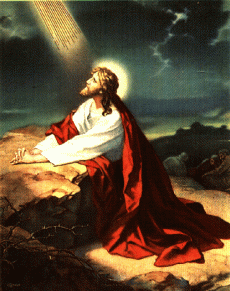
If someone is building up a fictional hero, the writer is unlikely to include bouts of fear especially if the hero is noted for his/her courage. Yet, on the evening before facing the cross, Jesus “being in an agony he prayed more earnestly; and his sweat became like great drops of blood falling down to the ground” (Luke 22:44). Such a bout of agony could be demonstrated to be an embarrassing admonition, thereby verifying Jesus’ time of prayer in the Garden of Gethsemane.

- Cowardice of Key Leaders.
Another admonition that would have been embarrassing for the early Christian movement was the claim that the early church leaders, even those of prime importance, fled when Jesus was tried.[4] Consistently, the four canonical Gospels indicate that the male disciples fled while the women remained with Jesus.[5]Women were also listed as prominent disciples in the early church movement (Rom. 16:1-3, 7, 12; Phil. 4:2-3; 1 Cor. 16:19).
In a patriarchal society (where men are elevated and women minimalized), is this something you would want to promote if it were not true??? Would you really want people to know that the women were brave while you were a coward???

- Joseph of Arimathea’s Burial of Jesus.
Mark, generally held to be the earliest Gospel, notes that one Joseph of Arimathea “a respected member of the council, who was also himself looking for the kingdom of God, took courage and went to Pilate and asked for the body of Jesus…And when he [Pilate]learned from the centurion that he was dead, he granted the corpse to Joseph” (Mark 15:43, 45).
Now, Jesus had been condemned by the Sanhedrin. Joseph of Arimathea was a member of the Sanhedrin. Thus, the burial of Jesus was embarrassing for the church as it would claim that the disciples could not even provide a decent burial. It would take one from the very council that condemned Jesus to give Jesus a proper burial.

- Testimony of Women.
Habermas notes that “The Gospels are unanimous in their claim that women were the earliest witnesses to the empty sepulcher (Mt 28:1-10; Mk 16:1-8; Lk 24:1-9; Jn 20:1-2). This is a powerful indication of the authenticity of the report, since a woman’s testimony was generally disallowed in a law court, especially on crucial matters.”[6]
We already noted how that first-century Palestine, as well as the rest of the Greco-Roman society, was patriarchal in scope. Lesley DiFrancisco notes that “In the patriarchal societies characteristic of this time, men had social, legal, and economic power. Although women could achieve some status through marriage and motherhood, they were often dependent on men.”[7]
Here again, it would not make sense to have the women as the first witnesses of the resurrected Christ unless it actually took place in that fashion.

- Doubt of Some Pertaining to Jesus’ Resurrection.
Finally, if one were to invent the Christian story, then one would show that everyone saw and believed without reservation. However, the Gospels show that even after Jesus had risen from the dead, some doubted. Matthew writes that “when they saw him they worshipped him, but some doubted” (Matthew 28:17). Luke notes that the women had seen Jesus but the male disciples refused their testimony seeing it as an “idle tale” (Luke 24:10-11). Who could forget of one “Doubting Thomas” who later became “Believing Thomas” (John 20:24-29)? The fact that some disciples doubted the report could be seen as an embarrassing admonition for the early church.
Conclusion
Several other embarrassing admonitions could be added to the seven listed above. However, one should note the great weight of authenticity that comes from these embarrassing admonitions. No one likes to be embarrassed. No one! Thus, we must ask, does Jesus pass the third historical test found in embarrassing admonitions?
YES!!!
So far, Jesus of Nazareth and the early Christian movement have stood strong with the historical methodology employed. But, we are not done yet. Next week, we will examine the fourth aspect of the historical method: early testimony.
Just how early are the sources that we possess? Join Pastor Brian next week 🙂
January 11, 2016. Brian Chilton.
Bibliography
DiFrancisco, Lesley. “Women in the Bible, Mistreatment of,” The Lexham Bible Dictionary. Edited by John D. Barry, et al. Bellingham, WA: Lexham Press, 2015. Logos Bible Software.
Habermas, Gary R. Habermas, and Michael R. Licona. The Case for the Resurrection of Jesus. Grand Rapids: Kregel, 2004.
Habermas, Gary R. Habermas, The Risen Jesus & Future Hope. Lanham, MD: Rowman & Littlefield, 2003.
Meier, John P. A Marginal Jew: Rethinking the Historical Jesus. Volume 1. New York: Doubleday, 1991-2001. In Gary R. Habermas and Michael R. Licona. The Case for the Resurrection of Jesus. Grand Rapids: Kregel, 2004.
Endnotes
[1] John P. Meier, A Marginal Jew: Rethinking the Historical Jesus, Volume 1 (New York: Doubleday, 1991-2001), 168 in Gary R. Habermas and Michael R. Licona, The Case for the Resurrection of Jesus (Grand Rapids: Kregel, 2004), 38.
[2] Gary R. Habermas and Michael R. Licona, The Case for the Resurrection of Jesus(Grand Rapids: Kregel, 2004), 38.
[3] Unless otherwise noted, all Scripture comes from the English Standard Version(Wheaton: Crossway, 2001).
[4] E.g. Matthew 26:69-75.
[5] A couple of examples of the women’s faithfulness are seen in Matthew 27:55-56 and John 19:24b-27.
[6] Gary R. Habermas, The Risen Jesus & Future Hope (Lanham, MD: Rowman & Littlefield, 2003), 23.
[7] Lesley DiFransico, “Women in the Bible, Mistreatment of,” The Lexham Bible Dictionary, ed. John D. Barry et al. (Bellingham, WA: Lexham Press, 2015), Logos Bible Software.
Jesus and the HIstorical Method – PArt 2
In his last installment of “Examining Jesus by the Historical Method,” Pastor Brian discussed the first aspect of the historical method. He examined how Jesus of Nazareth enjoys documentation by a variety of independent sources, something that is important for both the historian and the detective.
This article will discuss the second method by which a person and/or event of history is scrutinized—enemy attestation.
Gary Habermas and Michael Licona note that “If testimony affirming an event or saying is given by a source who does not sympathize with the person, message, or cause that profits from the account, we have an indication of authenticity.”[1]
Here’s why this is so important: if a person’s mother said that her child had integrity, one could claim the mother spoke out of bias for her child. But what if the person’s enemy said that the person had integrity? The claim of integrity would hold greater weight.
The same is true of historical enemy attestation. The following are examples of enemy attestation as it pertains to Jesus of Nazareth. The writers of the texts you are going to read are not Christians and have no allegiance to the Christian church.

- Roman historian Tacitus (Annals 15.44), c. 100AD.
In the late first-century, Roman historian Tacitus set out to write an account of the histories of Rome. When discussing the twisted emperor Nero, Tacitus briefly mentions Jesus and the band of followers known as the Christians. Tacitus’ comments are associated with Nero’s burning of Rome.
Tacitus writes,
Consequently, to get rid of the report, Nero fastened the guilt and inflicted the most exquisite tortures on a class hated for their abominations, called Christians by the populace. Christus, from whom the name had its origin, suffered the extreme penalty during the reign of Tiberius at the hands of one of our procurators, Pontius Pilatus, and a most mischievous superstition, thus checked for the moment, again broke out not only in Judaea, the first source of the evil, but even in Rome, where all things hideous and shameful from every part of the world find their centre and become popular. Accordingly, an arrest was first made of all who pleaded guilty; then, upon their information, an immense multitude was convicted, not so much of the crime of firing the city, as of hatred against mankind. Mockery of every sort was added to their deaths. Covered with the skins of beasts, they were torn by dogs and perished, or were nailed to crosses, or were doomed to the flames and burnt, to serve as a nightly illumination, when daylight had expired.[2]
From Tacitus, we can acquire that Jesus of Nazareth lived, died during the reign of Tiberius by the hands of Pontius Pilate, and was believed to have been resurrected (from Tacitus’ claim of one “mischievous superstition”). One also can acquire the great devotion of the early Christians from Tacitus’ text.

2. Jewish historian Josephus (Antiquities 18.3), c. 90AD.
Josephus was not a Christian, but was a Jewish historian. Josephus was also a Roman sympathizer. Since Josephus was not a believer, this has led some to dismiss Josephus’ reference to Jesus. However, Josephus mentions Jesus and Jesus’ brother – James – in other places of his work.
Many have noted that the reference is legitimate, but may have originally left out the part where the historian refers to Jesus as “the Christ.” While the exact wording is debated, the reference is authentic.
Josephus writes,
Now, there was about this time Jesus, a wise man, if it be lawful to call him a man, for he was a doer of wonderful works—a teacher of such men as receive the truth with pleasure. He drew over to him both many of the Jews, and many of the Gentiles. He was [the] Christ; and when Pilate, at the suggestion of the principal men amongst us, had condemned him to the cross, those that loved him at the first did not forsake him, for he appeared to them alive again the third day, as the divine prophets had foretold these and ten thousand other wonderful things concerning him; and the tribe of Christians, so named from him, are not extinct at this day.[3]
From Josephus, we can know that Jesus lived, was considered to be wise, was condemned by Pontius Pilate, was crucified on a cross, died, and that his disciples believed him to have been raised from death.
3. Talmud (Sanhedrin 43a), c. 220AD but reports an earlier tradition.
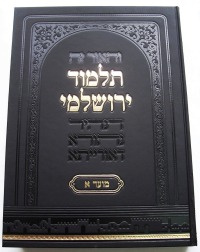
The Babylonian Talmud contains a tradition that was handed down from a previous source. While there are some differences in this account than the Gospel record (for instance, the Talmud only records 5 disciples), the general facts about Jesus (or Yeshu) are the same.
Sanhedrin 43a reads,
There is a tradition (in a Barraitha): They hanged Yeshu on the Sabbath of the Passover. But for forty days before that a herald went in front of him (crying), “Yeshu is to be stoned because he practiced sorcery and seduced Israel and lead them away from God. Anyone who can provide evidence on his behalf should come forward to defend him.” When, however, nothing favorable about him was found, he was hanged on the Sabbath of the Passover.[4]
Notice that this is not a source friendly to Jesus. Even still, one can demonstrate the hostility to Jesus from the religious authorities, the crucifixion of Jesus, and even the working of miracles (attributed as sorcery in this reference). Also, one notes that Jesus, in accordance with the Gospel record, was hung on the cross near the time of Passover.
4. Mara Bar-Serapion, c. 73-100AD.
At some point after 70AD, Syrian and Stoic philosopher Mara Bar-Serapion wrote of the importance of a person’s pursuit of wisdom. In doing so, Serapion compares Jesus (ie. The “wise king” to Socrates and Pythagoras.
Serapion writes,
What are we to say when the wise are forcibly dragged by the hands of tyrants and their wisdom is deprived of its freedom by slander, and they are plundered for their superior intelligence without the opportunity of making a defence? They are not wholly to be pitied.
What advantage did the Athenians gain from putting Socrates to death? Famine and plague came upon them as a judgment for their crime. What advantage did the men of Samos gain from burning Pythagoras? In a moment their land was covered with sand. What advantage did the Jews gain from executing their wise king? It was just after that that their kingdom was abolished.
God justly avenged these three wise men. The Athenians died of hunger; the Samians were overwhelmed by the sea; the Jews, ruined and driven from their land, live in complete dispersion. But Socrates did not die; he lived on in the teaching of Plato. Pythagoras did not die; he lived on in the statue of Hera. Nor did the wise king die; he lived on in the teaching which he had given.[5]
Thus, one can identify the wisdom that even Jesus’ adversaries found in the Nazarene. In addition, one can find that Jesus’ teachings were passed down by the early church.
5. Thallus (from Julius Africanus fragment), c. 52AD.
Julius Africanus quotes a now extant (meaning that it is lost) writing from a historian named Thallus. Africanus states that Thallus “wrote a history of the Eastern Mediterranean world from the Trojan War to his own time…Thallus, in the third book of his histories, explains away this darkness as an eclipse of the sun—unreasonably, as it seems to me (unreasonably, of course, because a solar eclipse could not take place at the time of the full moon, and it was at the season of the Paschal full moon that Christ died).”[6]
Thus, from Thallus one can note the darkness that surrounded Christ’s death.
6. Acts of Pilate (from Justin Martyr, First Apology 35), Justin wrote in the mid 2nd century but records a text from the first-century AD.
In his book the First Apology, Justin Martyr refers to a commonly known document known as the Acts of Pontius Pilate. Unfortunately, the document is now extant.
Nevertheless, Martyr writes,
And the expression, ‘They pierced my hands and my feet,’ was used in reference to the nails of the cross which were fixed in His hands and feet. And after He was crucified they cast lots upon His vesture, and they that crucified Him parted it among them. And that these things did happen, you can ascertain from the Acts of Pontius Pilate.[7]
The translators of the text add the following note, “These Acts of Pontius Pilate, or regular accounts of his procedure sent by Pilate to the Emperor Tiberius, are supposed to have been destroyed at an early period, possibly in consequence of the unanswerable appeals which the Christians constantly made to them.”[8]
Some may see this as a forgery. However, it is difficult to think so. Such ancient records could have been confirmed and/or denied. The fact that early Christians tended to appeal to this document would tend to verify its authenticity to some degree. This causes us to think that there may be more ancient resources available yet to be discovered that would further confirm the historical veracity of Jesus of Nazareth.
Conclusion
From the enemy attestation presented, the historian can know the following:
1) Jesus existed;
2) Jesus was a teacher from Judea;
3) Jesus was thought to have been wise;
4) Jesus performed miracles, although attributed to sorcery by his adversaries;
5) Jesus was crucified at the command of Pontius Pilate;
6) Darkness surrounded the area at Jesus’ crucifixion;
7) Jesus was crucified around the time of the Passover;
8) One can assume from the information given that Jesus was buried;
9) Jesus was believed to have been resurrected;
10) and Jesus’ followers accepted suffering and death while still holding on to the belief of Jesus’ resurrection.
From enemy attestation, one can know a great deal about the fundamentals of Jesus’ life.
Does Jesus pass the test of enemy attestation? YES!!!
The third test considers embarrassing admonitions. Will Jesus pass the third test?
Bibliography
Africanus, Julius. Chronography 18.1. In Josh McDowell. The New Evidence that Demands a Verdict. Nashville: Thomas Nelson, 1999.
Bar-Serapion, Mara. TextExcavation.com. Accessed January 4, 2016.http://www.textexcavation.com/marabarserapiontestimonium.html.
Habermas, Gary R., and Michael R. Licona. The Case for the Resurrection of Jesus. Grand Rapids: Kregel, 2004.
Josephus, Flavius, and William Whiston. The Works of Josephus: Complete and Unabridged.Peabody: Hendrickson, 1987.
Martyr, Justin. “The First Apology of Justin.” In The Apostolic Fathers with Justin Martyr and Irenaeus. The Ante-Nicene Fathers. Edited by Alexander Roberts, James Donaldson, and A. Cleveland Coxe. Buffalo, NY: Christian Literature Company, 1885.
Tacitus, Cornelius. Annals XV.44. The Internet Classics Archive. Translated by Alfred John Church and William Jackson Brodribb. Accessed January 4, 2016.http://classics.mit.edu/Tacitus/annals.11.xv.html.
Talmud. Sanhedrin 43a. JewishChristianLit.com. Accessed January 4, 2016.http://jewishchristianlit.com//Topics/JewishJesus/b_san43a.html#DIS.
Endnotes
[1] Gary R. Habermas and Michael R. Licona, The Case for the Resurrection of Jesus (Grand Rapids: Kregel, 2004), 37-38.
[2] Tacitus, Annals XV.44, from The Internet Classics Archive, Alfred John Church and William Jackson Brodribb, trans, retrieved January 4, 2016,http://classics.mit.edu/Tacitus/annals.11.xv.html.
[3] Flavius Josephus and William Whiston, The Works of Josephus: Complete and Unabridged(Peabody: Hendrickson, 1987), Logos Bible Software.
[4] Talmud, Sanhedrin 43a, JewishChristianLit.com, retrieved January 4, 2016.http://jewishchristianlit.com//Topics/JewishJesus/b_san43a.html#DIS.
[5] Mara Bar-Serapion, TextExcavation.com, retrieved January 4, 2016.http://www.textexcavation.com/marabarserapiontestimonium.html.
[6] Julius Africanus, Chronography, 18.1, in Josh McDowell, The New Evidence that Demands a Verdict (Nashville: Thomas Nelson, 1999), 122.
[7] Justin Martyr, “The First Apology of Justin,” in The Apostolic Fathers with Justin Martyr and Irenaeus, ed. Alexander Roberts, James Donaldson, and A. Cleveland Coxe, vol. 1, The Ante-Nicene Fathers (Buffalo, NY: Christian Literature Company, 1885), 174–175.
[8] Ibid., 175, 1n.
Jesus and the Historical Method – Part 1
In this eight-part series, Pastor Brian Chilton will investigate how Jesus stands up to the historical scrutiny afforded to any person of antiquity.
This week, he will examine the issue of area of multiple, independent sources. You can see the original article here.
FYI, Muslims might grant many of the things he discusses in this article. When it comes to the historical crucifixion of Jesus of Nazareth, though, they will reject that. They might even grant you the historical records are accurate, but that’s because SOMEBODY ELSE DIED in Jesus’ place.
The Quran “assures” Muslims in Surah 4:157 that nobody killed Jesus nor they crucified Him, but that another was made to resemble Jesus. Who did this? Allah did. They will say it was because Allah loved Jesus and did not want Jesus to suffer or whatever… but Muslims are convinced Jesus did not die on the cross.
I have even heard Muslim apologist Shabir Ally on a debate go as far as grant the fact that Jesus might have been crucified, but he did not die on the cross. He either survived the crucifixion OR Allah raised Jesus to Himself putting somebody else in Jesus’ place.
It’s really interesting how my friends used to tell me I believe blindly in Christianity. That I was silly to accept things just by faith alone with no evidence (of course, Islam had tons of evidence according to them).
Well… the more I think about it, there is no real evidence for Jesus NOT dying by crucifixion, other than a book written six hundred years after Jesus died.
This is a slap on the face of any serious historian. Historians do not accept a historical testimony at face value. A Historian will not accept what the Quran says just because the Quran says it. It is cute to believe it if you’re Muslim, but if you are not – if you are objective – you will have to go to where the evidence points you.
The historian’s job is much like that of a detective. A detective assesses a crime scene. In doing so, the detective looks for eyewitnesses. One person may have seen the crime from one area. Another may have seen the crime from another angle. The more eyewitnesses, the more certain the detective can be that the event took place in a particular fashion. The same is true for the historian.
As it relates to Jesus, one must ask whether there are multiple independent testimonies relating Jesus. The answer is… YES!!
Gary Habermas’ 12 Minimal Facts Approach will helps us validate key events of the life of Jesus. Those facts are:
- Jesus died by Roman crucifixion.
- He was buried, most likely in a private tomb.
- Soon afterward, the disciples were discouraged, bereaved, and despondent, having lost hope.
- Jesus’ tomb was found empty very soon after his interment.
- The disciples had experiences that they believed were actual appearances of the risen Jesus.
- Due to these experiences, the disciples’ lives were thoroughly transformed, even being willing to die for this belief.
- The proclamation of the resurrection took place very early, at the beginning of church history.
- The disciples’ public testimony and preaching of the resurrection took place in the city of Jerusalem, where Jesus had been crucified and buried shortly before.
- The Gospel message centered on the death and resurrection of Jesus.
- Sunday was the primary day for gathering and worshipping.
- James, the brother of Jesus and former skeptic, was converted when, he believed, he saw the risen Jesus.
- Just a few years later, Saul of Tarsus (Paul) became a Christian believer due to an experience that he believed was an appearance of the risen Jesus.”[1]
The Sources
- Information independent in Matthew’s Gospel (c. A.D. 55-60).
While there is information shared between Matthew, Mark, and Luke, Matthew provides information only found in his gospel pertaining to the life of Jesus. From external and internal evidence, Brian believes the Apostle Matthew recorded the information in the Gospel that bears his name.[2]
The following is found exclusively in Matthew: angel appears to Joseph (Matt. 1:18-25); visitation of the Wise Men (2:1-12); escape to Egypt (2:13-18); return to Nazareth (2:19-23); much of the Beatitudes (3:1-5:42; 6:1-34; 7:7-14); Jesus’ promise for rest for the soul (11:20-30); leaders ask for a miracle (12:38-45); the Parable of the Weeds (13:24-30); various parables (13:33-52); Jesus heals the blind and mute (9:27-34); Jesus urges to pray for workers (9:35-38); preparation for persecution (10:16-42); Peter finds coin in fish’s mouth (17:24-27); further teachings of Jesus (18:10-35); Parables of the Workers (20:1-16); Parable of the Two Sons (21:28-32); Parable of the Wedding Feast (22:1-14); condemnation of religious leaders and grievance over Jerusalem (23:13-39); further parables of Jesus (25:1-46); Judas kills himself (27:3-10); guards posted at Jesus’ tomb (27:62-66); Jesus appears to the women (28:8-10); and the leaders bribe guards (28:11-15).
The preceding information is found only in Matthew. Thus, Matthew serves as an independent source.
- The Gospel of Mark (c. A.D. 50-55).
Scholars generally agree that Mark was most likely completed first. This does not hold universal agreement as others hold that Matthew was completed first. Nevertheless, it is generally agreed that Mark reports information that he received from Simon Peter. Thus, Mark provides the information of an eyewitness—that of Simon Peter.
- Information independent to Luke’s Gospel (c. A.D. 60).
Luke serves as a historian recording information found in a variety of sources. Since it is impossible to know all the sources that Luke used, historians generally lump together the information found only in Luke’s Gospel. In fact, Luke contains a vast amount of information found only in his Gospel including: 1:5-80; 2:1-40; 2:41-52; 3:19-20; 4:16-30; 5:1-11; 7:11-17; 7:36-8:3; 10:1-18:14; 19:1-27; 23:6-12; and 24:44-49.
The preceding information is found only in Luke. Thus, Luke serves as an independent source.
- Shared information used by Matthew and Luke, popularly called “Q” (c. 30-50).
Matthew and Luke share information that is exclusive to them. Scholars have called this information “Q” from the German word quelle which means source. The shared information from the Beatitudes serves as an example of Q. Not every scholar concedes that Q is a source. If Luke merely borrowed from Matthew, then this common source would be invalidated. However, as it stands now, Q could be another independent source for the life of Jesus.
- The Gospel of John (c. A.D. 85-90).
Internally and externally it appears that the Apostle John wrote or dictated the information found in the Gospel attributed to him. If so, John provides independent information relating to the life and message of Jesus of Nazareth. John, writing in a different style than the other Gospels, writes in a theological fashion. But John’s theological language should not hide the historical information that is provided.
John provides independent, eyewitness testimony that is extremely valuable.
Of course, Muslims will say that John has made Jesus into a God, and since it is the last Gospel that was written, you can see an evolution from Mark to Matthew and Luke, and finally John.
It is very interesting though, that Muslims will use the Gospel of John to point a supposed prophecy of Muhammad in it. When Jesus says He will send the Holy Spirit to guide us and comfort us – a messenger – that is supposed to be Muhammad.
So what is it then? Is John reliable or not? If Muslims do not trust the information given by John, how can they claim Muhammad is in there? Double standards, that’s all.
- Pre-Pauline material (creeds, hymns, formulations) (c. A.D. 30-35).
Scholars, nearly universally, agree that Paul records and reports ancient creeds (statements of faith), hymns, and formulations (oral traditions reporting events). These oral traditions “played a large role in the Greco-Roman world, since only a small minority, perhaps less than 10 percent could read and write.”[3]
One of the most important of these formulations includes 1 Corinthians 15:3-7. Others include 1 Corinthians 11:26; Acts 2:22-36; Romans 4:25; Romans 10:9; Philippians 2:8; 1 Timothy 2:6; and (while not written by Paul) 1 Peter 3:18.[4] One could argue that each of these formulations serve as independent sources.
- Non-Christian Sources.
Various non-Christians noted certain attributes pertaining to the life of Jesus. The following ten sources serve, in varying degrees, as sources relating to the life of Jesus.
- Roman historian Tacitus (Annals 15:44)
- Jewish historian Josephus (Antiquities 18:3)
- The Talmud (Sanhedrin 43a)
- Roman satirist Lucian of Samosata (The Death of Peregrine 11-13)
- Mara Bar-Serapion
- Thallus (from a Julius Africanus fragment) trying to understand what caused the darkness when Jesus died.
- Acts of Pilate (from Justin Martyr, First Apology 35)
- Gnostic works such as Gospel of Truth (20:11-14, 25-29)
- The Gospel of Thomas (45:1-16)
- The Treatise on Resurrection (46:14-21).[5]
While these sources do not hold the historical veracity as do the canonical Gospels, they do serve as independent sources for Jesus. Some of these sources are even hostile towards Jesus.
Pastor Brian will evaluate some of these sources in a future article.
- Clement of Rome (c. A.D. 90-95).
Clement of Rome wrote towards the end of the first century. While he records later than most on this list, he provides information as an independent source, relating material which is not quoted from the New Testament. Examples of Clement of Rome’s statements pertaining to the death of Jesus include:
“Let us look steadfastly [sic] to the blood of Christ, and see how precious that blood is to God, which, having been shed for our salvation, has set the grace of repentance before the whole world” (Clement of Rome, Corinthians 7).[6]
“Let us reverence the Lord Jesus Christ, whose blood was given for us; let us esteem those who have the rule over us; let us honor [sic] the aged among us; let us train up the young men in the fear of God; let us direct our wives to that which is good” (Clement of Rome, Corinthians 21).[7]
“Love admits of no schisms: love gives rise to no seditions: love does all things in harmony. By love have all the elect of God been made perfect; without love nothing is well-pleasing to God. In love has the Lord taken us to Himself. On account of the Love he bore us, Jesus Christ our Lord gave His blood for us by the will of God; His flesh for our flesh, and His soul for our souls”(Clement of Rome, Corinthians 49).[8]
Conclusion
What does the preceding tell us? It should tell us that great independent information exists for the historical Jesus. While some of the sources listed do not hold the weight that others do, that is beside the point. We are looking for various sources that tell us about the life of Jesus.
Jesus passes the first historical test. But what about the test of enemy attestation?
Pastor Brian will examine this issue in his next Apologetics post.
Bibliography
Clement of Rome. “The First Epistle of Clement to the Corinthians.” In The Apostolic Fathers with Justin Martyr and Irenaeus. Volume 1. The Ante-Nicene Fathers. Edited by Alexander Roberts, James Donaldson, and A. Cleveland Coxe. Buffalo, NY: Christian Literature Company, 1885.
Habermas, Gary R. The Risen Jesus & Future Hope. Lanham, MD: Rowman & Littlefield, 2003.
Licona, Michael R. The Resurrection of Jesus: A New Historiographical Approach. Downers Grove; Nottingham, UK: IVP Academic; Apollos, 2010.
[1] Gary R. Habermas, The Risen Jesus & Future Hope (Lanham, MD: Rowman & Littlefield, 2003), 9-10.
[2] Space will not allow me to provide the reasons in this article.
[3] Michael R. Licona, The Resurrection of Jesus: A New Historiographical Approach (Downers Grove; Nottingham, UK: IVP Academic; Apollos, 2010), 220.
[4] Habermas, The Risen Jesus & Future Hope, 39, 65n.
[5] Taken from Habermas, The Risen Jesus & Future Hope, 39, 67n.
[6] Clement of Rome, “The First Epistle of Clement to the Corinthians,” in The Apostolic Fathers with Justin Martyr and Irenaeus, ed. Alexander Roberts, James Donaldson, and A. Cleveland Coxe, vol. 1, The Ante-Nicene Fathers (Buffalo, NY: Christian Literature Company, 1885), 7.
[7] Clement of Rome, “The First Epistle of Clement to the Corinthians,” in The Apostolic Fathers with Justin Martyr and Irenaeus, ed. Alexander Roberts, James Donaldson, and A. Cleveland Coxe, vol. 1, The Ante-Nicene Fathers (Buffalo, NY: Christian Literature Company, 1885), 11.
[8] Clement of Rome, “The First Epistle of Clement to the Corinthians,” in The Apostolic Fathers with Justin Martyr and Irenaeus, ed. Alexander Roberts, James Donaldson, and A. Cleveland Coxe, vol. 1, The Ante-Nicene Fathers (Buffalo, NY: Christian Literature Company, 1885), 18.

Do Christians and Muslims worship the same God?
For one reason or another, I’ve been delaying writing a post about the nature of God, both in Christianity and Islam. It seems relevant now due to the recent news regarding Wheaton College. Everybody is talking about it on social media, and people have their own opinion on whether or not the teacher should have been suspended.
I personally think she incurred in deep theological contradictions. This issue, of course, goes deeper than wanting to hold hands with every Muslim around the world singing kumbaya. An assertion like this offensive to both authentic Muslims and authentic Christians.
This article is a combination of a lecture given by Keith Small and Andy Bannister, as well as my own insights on how we can use the role of Christian apologetics in further dialogue with Muslims. There are plenty of resources about Apologetics and Islam at www.bethinking.org. You should also check other links in which I refer you to other websites.
God and Muslims
Talking about God with Muslims can be extremely confusing because in so many ways we can seem to be talking about the same BEING. Most of the time we find ourselves coming into direct conflict with them, even though we are using the same words. We find different assumptions underlying our different views of God – concerning His character, His nature, and His actions towards humanity. The discussion can derail really, really quickly.
Here’s the thing. Muslims DO think they worship the God of Abraham, Isaac and Jacob. They DO think they worship the God of the Jews and the Christians.They really do think because that’s what the Quran teaches.
We believe in that which has been revealed to us and revealed to you. [speaking to Christians and Jews]. And our God and your God is one; and we are Muslims [in submission] to Him.
– Surah 29:46
You see, there is this open claim in the Quran that Allah is the same God that the Jews and the Christians worship. Now, before we continue, it would be important to know that Christians in Muslim countries, for example, DO refer to God as Allah. They also DO make the distinction between the different persons in the Trinity.
Allah is just the arabic word for God – THE GOD. That is why I personally do not have a problem with those names. However, for the purposes of this article, I will refer to the god of the Quran as Allah, and I will refer to the God of Jews and Christians as YHWH.
Throughout the whole Quran, you can read that God is one. God is one. It is almost as if the author of the Quran wanted to make that point more than clear – that God is only one.
Surah Al-Fatiha (Chapter 1)
In the name of God, the infinitely Compassionate and Merciful.
Praise be to God, Lord of all the worlds.
The Compassionate, the Merciful. Ruler on the Day of Reckoning.
You alone do we worship, and You alone do we ask for help.
Guide us on the straight path,
the path of those who have received your grace;
not the path of those who have brought down wrath, nor of those who wander astray.
Amen.
In context, those who have received grace are the Muslims – those who follow Muhammad. The ones who have the wrath are the Jews, and the ones who are misguided are the Christians. When you think about the five obligatory prayers a day (Salat) and the cycles within them, a devout Muslim ends up asking Allah not to let him become like a Jew or a Christian. He prays this at least twenty times a day.
Besides Chapter 1, Chapter 112 is also a good example of another prescribed prayer that Muslims might recite several times a day. This Surah is basically addressed at the Christians. Allah is one, and he has no son.
Sura Al-Ikhlas (Chapter 112)
In the Name of God, the Merciful, the
Compassionate
Say: ‘He is God, the One,
God the Eternal and Besought of all,
Neither begetting nor begot, Nor is there
anything comparable or equal to Him.
That is why for a Muslim, the sole idea of the Divinity of Christ is indeed a great blasphemy. This is key in understanding the issue behind whether or not Muslims and Christians worship the same god.
The unforgivable sin (shirk) for Muslims is associating partners with Allah. In the Muslim mind, a Christian – who sees God as a Trinity – is a polytheist. They understand the Trinity as being three gods. The Quran addresses the Trinity as Allah, Jesus and Mary. The fact that the author of the Quran had no real knowledge of Christian doctrine does not help either.
The Muslim thinks that our Christian beliefs about Jesus being God is a lie that we have invented. We have exceeded our limit in doing that. Allah calls for Christians to stop saying Three since Allah is but one God. There are not three Allahs. Again, the author of the Quran had no understanding of the doctrine of the Trinity.
O People of the Scripture [Christians], do not commit excess in your religion or say about Allah except the truth. The Messiah, Jesus, the son of Mary, was but a messenger of Allah and His word which He directed to Mary and a soul [created at a command] from Him. So believe in Allah and His messengers. And do not say, “Three”; desist – it is better for you. Indeed, Allah is but one God. Exalted is He above having a son.
I encourage you to watch these videos by James White. There are some many things out there about people wanting to give an opinion about these issues… and opinions are great. I am giving mine. But in the dialogue with Muslims, I believe, you really need to understand where they are coming from.
James White on Do Muslims and Christians worship the same God?
James White on Wael Ibrahim’s misunderstanding of the Trinity – Part 1
James White on Wael Ibrahim’s misunderstanding of the Trinity – Part 2
If people do not argue, they usually fight. We, as followers of Jesus, should not fight with Muslims. We have the responsibility of explaining them – when the opportunity arises – that many of the misconceptions they have about our faith are not grounded in reality, but in a lack of understanding of our doctrines mainly by the author of the Quran and Muhammad.
ARE ALLAH AND YHWH COMPATIBLE?
Colin Chapman in his book Cross and Crescent sites seven areas of general similarity. He would use these to talk to a Muslim about the God of the Bible. This can be very useful if you have a Muslim who is willing to listen. My Muslims listened a lot – they were great about that. They would always say, of course, that I was wrong because the Bible as it is today has been corrupted.
But is it corrupted?
You see, if the Bible (Hebrew Bible and New Testament) is NOT corrupted, then Islam is false. So these areas of similarity can be great to use if you would like to encourage a Muslim to read the Bible for himself. That can lead them on a path about the reliability of our Scriptures (Textual Criticism, Read Sea Scrolls, etc.)
So Muslims and Christians agree on these areas.
- God creates
- God is one
- God rules
- God reveals
- God loves
- God judges
- God forgives
The issue here is that even though we agree on these similarities, we differ on the HOW God does these things. That’s where the real difference between Allah and YHWH comes. Let’s explore these points. I encourage you to read the Quran so you might be able to grasp these differences better.
1. GOD CREATES
According to the Quran, Allah creates with just his word. BE, and it is.
In the Bible, YHWH creates with His Word and His Spirit – The Trinity is involved right away.
2. GOD IS ONE
Allah is a very numerical oneness. The Quran really never describes what that oneness (Doctrine of Tawheed) looks like. The Quran describes what Tawheed IS NOT – associating partners with Allah.
YHWH is One – yes – but He is a Trinity. One BEING, but three persons. The Trinity explains why we can be made out of complex molecules, and cells and yet we are still one essence. I encourage you to read The Forgotten Trinity by James White.
This might not make sense to many of you, but it resonated with me greatly. I majored in Chemistry, Biology and Pharmacy. When I read the testimony of Nabeel Qureshi in his book Seeking Allah, Finding Jesus, I was amazed at how God can really speak into anybody’s life. Do you want to know what made Nabeel start giving the Trinity a chance? Organic Chemistry.
Technically, a molecule with resonance is every one of its structures at every point in time, yet no single one of its structures at any point in time. It’s all the structures ALL the time, never just ONE of them.
A molecule of nitrate is all three resonance structures all the time and never just one of them. The tree are separate but all the same, and they are one. They are three in one. If there are things in this world that can be explained like this – though incomprehensibly so – then why cannot God?
– Nabeel Qureshi
3. GOD RULES
Allah rules as a dictator in the Quran – absolute, unquestioning rule. He rules over everything and also through angels.
YHWH rules cooperatively. The Trinity rules in complete harmony.
4. GOD REVEALS
Allah gives revelation through nature (a lot of Muslims are using intelligent design as an apologetic) and he reveals through prophets. What Allah reveals is just his will – but he never reveals himself.
YHWH reveals through nature, prophets, but specially through the incarnation of Christ. YHWH not only reveals His will, but He also reveals Himself. This is a concept that is embodied through Genesis 1 to Revelation. YHWH loves His people and wants to live with them, dwell with them. He wants a relationship with His people. YHWH has revealed Himself to the fullest in the person of Jesus Christ.
5. GOD LOVES
Allah bestows his favor and loves only those who love him. He loves only those who repent and turn to him. He DOES NOT love those who reject Muhammad.
YHWH loves sacrificially. Allah does not put Himself out to love, but YHWH does at huge cost to Himself. YHWH loves everyone, even the ones who reject Him. Over and over He would always forgive Israel. He punished them, but the Israelites are His people. YHWH is their Husband. He gave them promises that He has to keep. Through the Jewish nation all nations in the world will blessed. Through Messiah, all the Gentiles would come into a relationship with YHWH.
YHWH in the New Testament shows His infinite love for all people by dying in our behalf. Jesus is YHWH in the flesh. He loved us first. He came to this earth not to condemn the world, but to sabe the world through Jesus.
But God demonstrates His own love for us in this: While we were still sinners, Christ died for us. Since we have now been justified by his blood, how much more shall we be saved from God’s wrath through him [Jesus]! For if, while we were God’s enemies, we were reconciled to him through the death of his Son, how much more, having been reconciled, shall we be saved through his [Jesus’] life!
6. GOD JUDGES AND FORGIVES
Allah judges capriciously. He doesn’t judge according to a standard. The chief attributes of Allah are his power and his sovereignty, and even his love is submitted to those. Allah is under no obligation to forgive or purify anyone, he doesn’t commit himself to save any individual. You can visit the sources here.
Likewise, Allah also forgives capriciously. Allah just forgives. No need for atonement like YHWH or the Cross. Allah forgives just like that. But since there is no standard on how Allah judges or forgives, you just never know where you stand with him on the Day of Judgement.
Whoever Allah guides – he is the [rightly] guided; and whoever He sends astray – it is those who are the losers. And We have certainly created for Hell many of the jinn and mankind
– Surah 7:178-179
Whoever says, ‘Subhan Allah wa bihamdihi,’ one hundred times a day,will be forgiven all his sins even if they were as much as the foam of the sea.
Whoever says, ‘La ilaha illal-lah wahdahu la sharika lahu, lahu-l-mulk wa lahul- hamd wa huwa ‘ala kulli shai’in qadir,’ one hundred times will get the same reward as given for manumitting ten slaves; and one hundred good deeds will be written in his accounts, and one hundred sins will be deducted from his accounts
Whoever Allah sends astray – there is no guide for him. And He leaves them in their transgression, wandering blindly.
-Surah 7:189
By Allah! I would not feel safe from the deception of Allah, even if I had one foot in paradise.
YHWH judges with perfect justice and He judges everyone. He forgives through they system of atonement (a Jewish concept) that provides legal basis for His judgement. Those who believe in Jesus’ atonement in the cross are the ones who receive the forgiveness. YHWH’s forgiveness is available to all, but you have the responsibility to receive it.
This is the confusion that Muslims have. They do not understand that Jesus’ death has the power for the forgiveness of their sins, because they believe Jesus was only a man. This is stressed out throughout the Quran and the Sunnah – that nobody should pay for your sins. This is fair, of course, no man should be responsible for your sins. All men sin.
If Jesus were solely man, atonement through Him would make no sense to a Christian either. Muslims assume this because they are Unitarian. They do not have a proper understanding of the Trinity so they cannot understand that Jesus is more than a man. Jesus is God. Jesus was also fully man, and as man, He never sinned. The Creator of the universe is sacrificing Himself for you to have a relationship with Him. He loves you that much. But for the Muslim mind, this is blasphemy. Allah cannot lower himself like that. Allah cannot make himself a man because it takes away from his majesty.
I don’t think any Muslim would deny that if God Himself wanted to become a man He is powerful enough to do it. If a Muslim denies this, they are actually denying God’s omnipotence. I guess Muslims put God into a box. They make assumptions about what God can and cannot do based on their own presuppositions about Allah’s oneness.
For example, Muslims ask, “If Jesus is God and He died on the cross, then who was in heaven ruling the universe when God died?” This presents a problem for them because they are thinking oneness in number. This is not a problem for the Trinitarian Christian.
I would ask a Muslim another question, though. If God is Unitarian, then how would you explain the accounts in the Quran when Musa (Moses) talks to God in the burning bush? According to Tafsir Ibn Kathir (exegesis – commentary of the Quran), God talks to Moses from within the bush. But if God is in the bush, and Allah is only one, then who is in heaven ruling the world? Even for the Muslims, Tawheed presents a problem.
Regarding atonement through blood and sacrifices is not a concept that the first Christians came up with. The very first generation of Christians were all Jewish! Atonement does not go against the Hebrew Bible or against the teachings of the Torah. Jesus actually came to fulfill the Law and the Prophets. Jesus was the perfect sacrificial atonement. And whoever sets up against Israel and God’s love for the Jewish people is standing on very thin ice.
If Jesus is not the Messiah of the Jewish people, then He is not the Savior of the Gentiles. Orthodox Christianity is very Jewish.
Day after day every priest stands and performs his religious duties; again and again he offers the same sacrifices, which can never take away sins. But when this priest [talking about Jesus] had offered for all time one sacrifice for sins, he sat down at the right hand of God, and since that time he waits for his enemies to be made his footstool. For by one sacrifice he has made perfect forever those who are being made holy
More thoughts on Allah and YHWH
One of the names of Allah is the JUST. The Quran never says this. Allah commands justice. Muslims think Allah is the best of judges. The problem is that when these concepts are applied, they seem to be arbitrary.
Allah doesn’t have to be fair. His mercy and his judgement are subjected to his sovereignty. One of the names of Allah is the Holy. In the Bible, though, HOLINESS has two components. First, YHWH is exalted above us – greater than us. Second, YHWH has absolute, moral purity.
This is why YHWH demands payment for every single sin. Allah just forgives as if he can sweep sins under the carpet without punishing sin. But YHWH’s holiness is so great that every single act that goes against His character demands to be punished.
YHWH is the fairest of judges and the most merciful of judges. The fairest of judges HAS to punish every single sin. Every act of rebellion against the Creator of the Universe has to be addressed. In the other hand, the most merciful of judges will always forgive. Only YHWH is able to meet these two criteria.
In the atonement of Jesus, YHWH is judging sin – He is still being JUST – and at the same time He forgives – He is MERCIFUL.
Allah cannot do these two things. Muslims think he can. They say Allah can forgive freely because he is so merciful. But what do you with the sin? If Allah forgives like that, then Allah is not the fairest of judges. Besides that, if Allah makes you pay and atone for your own sins (good deeds vs bad deeds) then Allah is not the most merciful.
A Muslim who tries to explain this concepts of JUSTICE and MERCY, thinking that Allah can indeed just forgive and pretend that nothing really happened, has no understanding of the gravity of sin, and how devastating sin is. Either that, or Allah is not that Holy. Not as holy as YHWH anyway.
A Muslim may understand the concept of outer purity or ceremonial cleanliness – as they do practice ceremonial washing before prayer – but they have no understanding whatsoever of moral inner cleanliness or purity. As long as they don’t act on it, they do not understand why anger can be equated with murder, or lust can be equated as adultery. This is something I discussed often with my friends, and they did realize that the standard that Jesus demanded for me as a Christians was impossible to meet.
“DUH! That’s why I need a Savior”, I would say. Then again, I do not know if they really understood that this was the standard God demanded of every single human being if they ever want to have direct access to their Creator.
Philosophical implications of Allah as Unitarian
1 John 2:29 tells us that God is righteous, and 1 John 4:8 tells us that God is love. With YHWH these two traits are exercised fully in balance.
Allah cannot do this. Love IS NOT one of the seven eternal attributes of Allah in Islamic theology. YHWH IS LOVE. Allah focuses on power and might. One of Allah’s 99 names is The Loving. It can also be translated as The Affectionate, but it is only one name – you have like fifteen or twenty that have to do with power. Allah is only loving and merciful to those who repent.
If you read the Quran, you’ll see very quickly that power to overwhelm, to destroy, to terrify, to condemn to hell is the main emphasis of the book. Allah loves those who love him, and he hates those who reject him and his prophet.
Even tough Allah is The Loving or The Merciful or The Forgiving, Allah has a philosophical problem. All these adjectives need both a subject and an object. If these atributes are eternal as Muslims claim them to be, then Allah becomes contingent upon his creation. Allah becomes subject to existing only if he creates. Allah in the Quran had to create, otherwise he cannot be loving, or forgiving or merciful. Allah’s eternal attributes become otherwise because he couldn’t be who he was without his own creation.
The Trinity has never faced this problem. YHWH is not only loving. YHWH himself IS love. From eternity past, YHWH has always existed in harmony between three persons so He didn’t need to create anything. He was perfect, complete and fulfilled. Creation is an act of grace. Love changed from the horizontal (Godhead) to the vertical (human beings). The expression of love changed, but YHWH never changed.
Allah is not personal. YHWH is personal. Now, look at reality. What model explains human reality? It is very difficult to see that which is personal come from what is impersonal. The Christian concept of God explains reality. If we are indeed created in YHWH’s image, it is hardly a surprise that we, humans, need and want to be in relationship with other human beings.
Theology precedes anthropology. The God you have will directly influence the society you build. Is it any wonder why Islam produces societies that are subjected only to the power of the state?
On the other hand, Muslims also affirm the eternality of the Quran. Orthodox Islam affirms that the Quran is the eternal word of Allah. The Quran is uncreated. It has existed – for all time.
Now, think about this… Doesn’t the presence of another eternal entity existing alongside Allah for all time begins to attack the doctrine of the oneness of Allah?
There is a real tension there. And there are schools of thought in Islam that would call heresy on those who think one way or another. If the Quran is uncreated, then you have two eternal beings from eternity past, and you end up contradicting the Quran on the Oneness of Allah.
But if the Quran is created, that means that at some point in time, Allah was without His eternal Word – and how can that be? In this case, you end up also contradicting the Quran itself. More info here.
What do I think?
Goodness… many things. I love these issues. Call me weird, my husband is sick of me talking about it – which is why I don’t talk to him about it anymore.
My experience is short, and I haven’t read all the sources there are to read regarding Islamic texts. But understanding the claims of the Quran, and having a deep understanding of the Hebrew Bible and the New Testament, I think that Muhammad might have wanted to compromise with both Jews and Christians. He might have actually thought he was a prophet in the line of Abraham, Isaac and Jacob.
You see, tough, the prophets only come through Abraham, Isaac and Jacob. You ask any Muslim, and they would tell you Muhammad came from Ishmael, not Isaac. The prophets were to be Israelites, not Ishmaelites. Still, there are many other reasons as to why the Jews would reject the prophethood of Muhammad, but we’ll leave those for another time.
Let’s say Allah revealed the Quran.
The Quran says that Jesus is the Messiah. But the Jews in Muhammad’s time rejected this. In Jewish thought, Jesus was a blasphemer. Jesus died by crucifixion. History agrees with this. In the Jewish mind, even today, the Messiah cannot die – let alone by crucifixion. So the Jews rejected Muhammad. Not all of them, but some. So what do I know? Maybe Muhammad tried to appeal to the Jews by saying that Jesus was the Messiah and Allah did not let Jesus die on the cross.
Now, the Christians… Muhammad said that Jesus was the Messiah, and the Christians liked that. But the Quran also said that Jesus never die on the cross, and that Jesus was only a man. This goes against Christian doctrine even before the New Testament was put together. The deity of Christ is not something that Paul invented – Christians already knew that even before Paul wrote the letters. It is very clear, now that we have the manuscripts and we can see them all, that nothing has ever been corrupted in the text. So of course some Christians converted to Islam, but other Christians had to reject Muhammad as a false prophet – just as the Jews.
This is how I picture it in my mind…
In today’s world (except from photos and videos), people can read about the Holocaust. Let’s say the Holocaust happened a year ago. People wrote about the Holocaust because they lived it, they saw it, they experienced it. People were eyewitnesses to it. Now imagine this. This is the era of technology so things don’t get lost that easily. But just imagine for one minute that there are no computers or anything to store information. We only have paper – low quality paper.
People need to copy the records that we have available about the Holocaust. All the world – for whatever reason – needs to know about the Holocaust, why it happened and what it accomplished. So people begin copying the eyewitnesses accounts. People begin transcribing them like crazy, not only in English, but in many different languages.
Are you following me?
So these records end up being in circulation for many, many years. Centuries, actually. Within a century from now, people will still have copies of those original eyewitness accounts. The originals might be lost – it was low quality paper – but we have plenty of copies. Two centuries from now, still going strong.
We can actually compare all the copies, and the basic description of the Holocaust still remains the same. Sure, there are differences in spellings and words that might be weird, but the account of the Holocaust – when it happened, how it happened, why it happened, who was involved, where it happened – is still intact.
Three centuries, the same. Four centuries, the same. Five centuries, same. Now, we may not have the originals in five centuries, nor the copies from a century from now. Maybe we will lose them, and we will always be looking for them. But the oldest one that we will have in our possession two thousand years from now will be two hundred years after the Holocaust. That’s pretty good if you consider that we have only seven copies from Plato written one thousand years after the original. Nobody questions Plato.
And thousands of years down the road, people will continue to copy our records of the Holocaust. One day, we will end up having more than 22,000 pieces of paper with which we can reconstruct the original eyewitness accounts. HOmer’s Iliad has 647 – and nobody questions Homer’s authorship.
We cared so much about preserving those records because the Holocaust changed History.
But then something will happen. About six hundred years from now, in the middle of a civilization that had never heard about the Holocaust, someone will come and will say that God gave him a message through an angel. And the message is basically this: You people are wrong. The Holocaust never happened like that. I will tell you exactly how it happened.
And a lot of people will believe that man, and his own version of the Holocaust. People who love this man will look back on the actual records that we preserved, and they will see that they contradict the man’s version of the Holocaust. But they will love that man so much, that in blind faith, they will begin allegations against our own records. The records we so carefully tried to preserve – the actual eyewitnesses accounts of the Holocaust – will be charged with corruption of the text.
And many people, unfortunately, will end up believing in the new version of the Holocaust that this man will give them. They will believe it only in faith, even tough the evidence says otherwise. In my own mind, that’s what Muhammad did.
You see, the Christian who recognizes ALL these issues is in a better position to explain to the Muslim about our faith, and about the text of the Bible. It is the responsibility of every Christian to show love to Muslims. Eventually, though, conversations will happen, and questions – deep theological questions – will arise.
The Christian has to be prepared to meet the challenge not only of understanding why Islam (the new version of the Holocaust) differs from Judaism and Christianity (the original version of the Holocaust). Not only that, but what it actually brings in the present life of a person. Muslims can have peace with God. They do not have it. They might think they do, but in reality, they do not know where they stand with God.
The Christian needs to learn how to make a strong case for Christianity.
It might be too much information, too difficult to grasp at the beginning, or intimidating, but God’s timings are prefect. If you only give God your heart, He will do amazing things through you. The first time I learned about Islam was seven years ago, and I cried because I was so confused about it. How come this Allah was the same God that I worshipped?
Little by little I began learning more and more about this. I am not an expert, but if I can learn, everybody can.
This post was so long… I’m sorry for that 😦
In short, do we – Muslims and Christians – worship the same God? No. I don’t think we do. But we have the opportunity of reaching out to our Muslim friends, and introduce them to who God really is 🙂
You might want to read Nabeel Qureshi’s opinion on the Wheaton’s College controversy.
 Dissecting Jesus
I read this article recently. I am so happy Bart Ehrman finally said this.
The study of the Historical Jesus has in the past decades generated lots of interest among Scholars. Among the world religion interested in this subject are the adherents of the Islamic faith. Muslims are willing to hear what the Scholars have to say and adapt which ever part seems to agree or confirm the Islamic belief, and in the end will go like “There you have it, the Qur’an have been echoing this for years!”
Among the Scholars Muslims would like to listen to and quote for the defense of Islam and as an attack on the Christian faith is the man, Bart D. Ehrman – the man Muslims love quoting when discussing the critical issues on the Gospels and the Bible as a whole.
The reason why the Muslims love to quote Ehrman among other liberal Scholars is obvious: Erhman is always about attacking the Bible. Even though Dr. Ehrman does not hold the same view with the Muslims – and will not come to the same conclusion with them – they love him anyway.
Recently, Bart posted on his blog, responding to certain questions he was asked, and one of those happened to be a trend that has grown for some years among the Muslims: the use of his material as an attack for the Bible. Before responding to the questions, Bart noted how a Muslim had earlier made this comment about how they use his work:
This pretty much gives an insight into the reason why the majority of Muslims are interested in Ehrman’s work, they see this as a tool for defending Islam and attacking the Gospels. Why do they do this? Because it “supports” Islam in a way. In other words, anything that advances the course of Islam should be used – no mater where or who said it. Even though there are some views Ehrman holds – which not only go contrary to some core Islamic teachings – but make Islam look like a made up religion, Muslims DO NOT want to know about this. All they want is what Ehrman has that can be used to destroy the Bible.
Bart continues in his response,
How on earth will Muslims continue to use Ehrman’s arguments when he sees one of the fundamental Islamic beliefs as ahistorical and false? How clearer can this be to any honest person looking to use an argument from which the source you disagree with?
That is the highest level of inconsistency I have ever seen. I once told a Muslim who quotes Ehrman in attacking the Bible how he debunks Islam on the crucifixion. His response was that Ehrman was wrong in that regard. Yet he believes and uses his argument on others areas. When will our Muslim friends wake up to the reality of this dangerous position and worldview?
Coming as a big surprise, while the Muslims attack the Gospels as being unreliable accounts of the life of the historical Jesus (on the basis of the fact that the Qur’an has a different opinion and views of Jesus), Bart and other Scholars still agree that the NT is what the Scholars draw from when executing their research on the historical Jesus.
Ehrman remarked that the Qur’an could not be trusted on this and cannot be taken seriously by Scholars on the historical Jesus. This alone should get the Muslims thinking since they love quoting Bart materials and using them as well.
We are not asking the Muslims to agree with Bart Ehrman on everything, but at least, we hope to see a consistent argument from Muslims in the future and not just anything they could get hold of to support Islam.