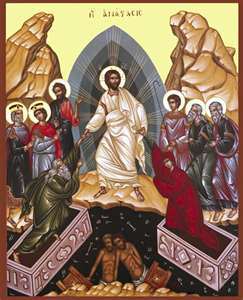
Muslim apologetics-Resurrection

Muhammad, the founder of Islam, said that Jesus never died on the cross, never rose from the dead, and never claimed to be Lord.

Muslim apologists have made valiant attempts to defend Muhammad’s assertions, but the facts of history simply can’t be seriously disputed here.

In this lecture, Dr. Gary Habermas, one of the world’s leading experts on the historical facts surrounding Jesus’ death and resurrection, evaluates some common arguments of Muslim apologists (such as Ahmed Deedat).

You might want to check this video out 🙂


What is The Gospel?

I had the opportunity to go to a Missions Conference this past weekend. It was truly awesome. I learned many things, and definitely felt the call of God for my life – which is something that I had probably known for the past seven years. I had never been to a conference, tough 🙂

Ever since I became a Christian, I have enjoyed talking to others about God and how much God loves them. At times, I guess, my family and friends have thought that I am crazy, brain-washed or just a “lost cause”.

But that is what happens when something radical is observed in your life. I was the worst of sinners. I know that is how Paul describes himself… and maybe he was, but I also killed a baby in my womb. And I have a history of sexual immorality that does not make me proud. I had a history… of so many things. But I am not that person anymore. I have no other explanation for the radical change in my life that the fact that I gave my life to follow Christ almost eight years ago.

I would like to encourage you to read 2 Corinthians 5:11-21

I understand it might be too long to post it so I won’t, but I will definitely talk about it – even if it’s little by little.

One [Jesus] has died for all, therefore all have died; and He died for all, that those who live might no longer live for themselves but for Him who for their sake died and was raised.

I no longer live for myself, but for the One who died for me. He died for my sake and for everybody’s sake. But you have to believe – you have to trust in His Death and Resurrection. You have to trust that His death takes your sins away. It doesn’t cover them – it wipes them away.

All this is from God, who through Christ reconciled us to Himself and gave us the ministry of reconciliation; that is, in Christ God was reconciling the world to Himself, not counting their trespasses against them.

It is Christ’s death what actually made me have peace with God. It is trusting that God is good, and that He actually wanted to be reconciled with me what made me follow Christ. If you owe someone a huge amount of money, and He himself hands you a ton of cash to pay Him back – wouldn’t you take the money? Wouldn’t you say “Thank you for paying yourself what I actually owe You?”  Why would you be proud and try to pay off a debt that you know you will never be able to repay? God forgave me everything that I rightfully owed Him.

Do you see how I cannot longer live for myself? Do you see how I cannot do anything but to live for Him who died for me?

If anyone is in Christ, he is a new creation. The old has passed away; behold, the new has come… in Christ God entrusted to us the message of reconciliation.

I am not the woman I was when I was 20 – thank God. And I am not the woman I was when I was 24. My life was radically changed when I trusted Jesus as my Savior. And at times, I forget that God has a purpose for my life, but He never forgets. At times, I don’t trust Him, but He has proven Himself faithful to me. If Jesus died to reconcile me with God… now He trusts me to reconcile the world to Him.

We implore you on behalf of Christ, be reconciled to God. For our sake He [God] made Him [Jesus] to be sin who knew no sin, so that in Him [Jesus] we might become the righteousness of God.

Paul implored the Corinthians, I implore you – make peace with God. What is it that you feel you are going to loose? What is it that you feel you will have to give up? If you don’t believe in God, of course, I cannot convince you. I would argue, tough, that the evidence for God is huge. But if you do believe that this life is not all there is, then, what are you waiting for?

Salvation is a free gift from God. Why wouldn’t you take it? Is it because the cost of following Jesus is too much for you? You know, I get it. In all honesty, i never consider the cost of following Him. This Following-Jesus- thing sounded great at the beginning, but then it became hard. It became hard to stop thinking about me all the time, and let the Spirit of God control my anger… It was hard to hold back my tongue, and to be patient, and kind. And you know what? I still mess up… But God knew that, and He still choose to die for me. He still died for you. But you have to make a choice: Will you choose to be reconciled with God through Jesus?


This past weekend, I felt so happy that I had decided to go to the conference. I was completely exhausted after spending my Friday night – and literally all Saturday – talking about Jesus. We were actually joking about having a Jesus overload. There was so much information and even theology given – it blew my mind.

I actually bought a book of one of the speakers – Jackson Wu. His lecture impressed me so much. It was something that I had never listened to before. He basically said that if Jesus did not die then God is a liar. 

God gave a promise to Abraham. God told Abraham that though him all nations would be blessed. Abraham always believed and he was declared righteous because of this. All through Israel’s history, the LORD (YHWH) always saved His people, and it was not because they deserved it, but because of God’s name sake. It was always because of God’s sake – because God promised to bless them.  

So if you fast forward to all the events in the history of Israel – the slavery in Egypt, the exile in Babylon… all until the moment God Himself enters history in the person of Jesus… God has always been in the business of keeping His promises and saving His people – all the nations. So if Jesus (God in the flesh) does not die, then God cannot keep His promise.

Of course, there are a thousand objections if you have other worldview, like if you’re a Jew or a Muslim or whatever. But then, that is a discussion that might have no end until Messiah comes (which at least is something that Jews, Christians and Muslims can partially agree on). Of course, Muslims and Christians would rather say until Messiah comes back.  Again, this is not an apologetic post.

In my life, there have always been two Bible passages that make my heart beat faster, and I have always known that is definitely something God has purposed for my life:

I charge you in the presence of God and of Christ Jesus, who is to judge the living and the dead, and by his appearing and his kingdom: preach the word; be ready in season and out of season; reprove, rebuke, and exhort, with complete patience and teaching. As for you, always be sober-minded, endure suffering, do the work of an evangelist, fulfill your ministry.

2 Timothy 4:1,2,5

What exactly does that mean? I don’t know. I don’t think I have been called to be a Pastor. I am of the idea of male leadership in the Church, but I also agree that there were a lot of women that did very important things in the years of the Church in Acts.

Brothers, my heart’s desire and prayer to God for them is that they may be saved. For “everyone who calls on the name of the Lord will be saved.” How then will they call on Him in whom they have not believed? And how are they to believe in Him of whom they have never heard? And how are they to hear without someone preaching? And how are they to preach unless they are sent? So faith comes from hearing, and hearing through the word of Christ.

Romans 10:1,13-16

I know what this means. It has always been obvious to me or maybe not. I don’t know. But I want to go.

Salvation comes when somebody listens to the good news about God wanting to be reconciled with them. They only have to take action – Repent from their wrong doings, and Trust in the name of Christ.

But how are they gonna call in the name of the Lord Jesus, if they don’t know about Him first? And how will they know if nobody tells them? Somebody has to go and tell them! Somebody has to be sent… I know the Lord Jesus. I wanna go and tell them.

What does that look in my life? I have no idea. I think I will figure that out with my pastors. I am definitely telling my computer right now, ha!

That Romans chapter has so much meat. In Romans 10:13, Paul quotes directly from the Prophet Joel 2:32, “Everyone who calls in the name of the LORD shall be saved”. This is in the mind of Paul, along with other Christians, understood as events described for when the Messiah comes. In the Hebrew Bible, this is a Messianic prophecy. Do you see how LORD is uppercase? That LORD means YHWH.

It is YHWH who saves. But Paul is applying the ability to save to Jesus Himself. People need to hear about Christ in order to be saved. How can Jesus save unless He is more than a mere human being? You see? Jesus is YHWH in the mind of Paul.

But if you think that Paul made up the divinity of Christ, then how can you explain away Acts 2:21, where Peter ends up quoting Joel 2:32 also? This is within the context of believing in Jesus as both Lord and Christ for the forgiveness of sins (verses 36-38). In Peter’s mind the name who saves is Jesus. This points to Jesus’ deity – for who can forgive sins but God?

I will end with my deepest thoughts.

During the conference, it was really humbling to see many people walking forward when an African missionary asked them to respond to God’s call in their lives. I saw people responding to the call of being pastors, and leaders. I saw people answering the call of becoming missionaries. And I cried when people responded to the call of going to places where they know they might die.

You see, these people don’t feel like dying. They do not want to kill or be killed. They don’t gain anything by going to these places – they have everything. They have peace with God already. They have salvation already. They have been reconciled with God. And that is exactly the reason they are going. They want to reconcile others with God.

They want to go because there are people who don’t know about Jesus. And they actually want to tell them – even if it costs them their lives.

You can watch this beautiful video about what the GOSPEL is all about.

YOU were Jesus’ destination when He left heaven 🙂

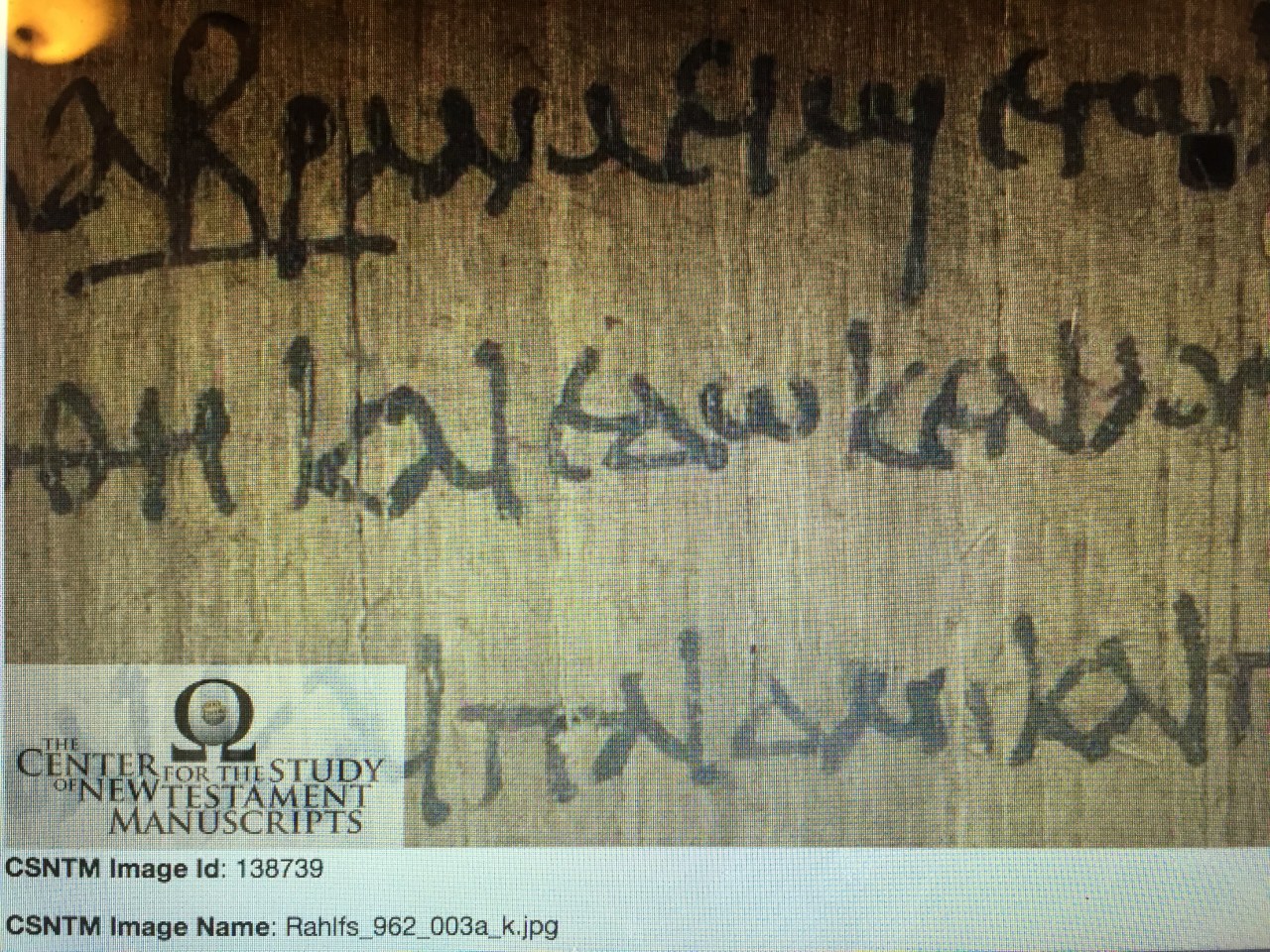
Digitalized Manuscripts

The New Center for the Study of New Testament Manuscripts

Since they began their work in 2002, a core part of their mission has been to make it possible to view and study New Testament manuscripts from anywhere in the world. They have worked toward this by traveling around the globe and capturing beautiful digital images of some of the most important extant manuscripts.

Today, they are taking another step forward by making it easier than ever for us to access manuscripts.

They’re launching the new CSNTM.org.

Here are some of the features that we can expect to find now and in the coming weeks:

  • New Manuscripts – They will be adding 10-20 new manuscripts to their website weekly for the next few months. These will be from the National Library of Greece in Athens (their ongoing project for 2015–16), as well as previously unposted images from hundreds of manuscripts and rare books in their collection.
  • New Look – They have revamped their entire website to make it both simpler and richer in content. They have new content, which narrates how they go about digitizing and archiving manuscripts. They also explain what goes into their extensive training program that enables their teams to work quickly while capturing high-quality images.
  • New Viewing Environment – The website is equipped with a new viewer, which makes it easier than ever to navigate manuscripts and view their stunning new images.
  • New Usability – Their new site is also designed to work perfectly with mobile devices and tablets, enabling us to view manuscripts or to access other resources quickly, whenever we need them.
  • New Search Features – The website is now outfitted with an extensive search functionality. Searches can be performed at the manuscript level, allowing us to find manuscripts that meet certain criteria (e.g., date, contents, material, location). They can also be performed at the image level, which allows us to find specific features within a manuscript. For instance, they now have a Jump to Book option that allows us to find the beginning of each book that a manuscript contains. Also, one can search tagged manuscripts for verse references. Every place, for example, in which John 1.1 is tagged will automatically populate when the verse is searched.
  • New Search Database – The search database holds tags for each manuscript and individual image. As their team continues tagging their growing collection, the search function will become more comprehensive each week. But the task is daunting. They want our help for the tagging!

If interested, you can reach them via their contact page:

http://www.csntm.org/

Please share their new site with colleagues and friends, so more and more people can continue to utilize CSNTM’s library, which is free for all and free for all time. They sincerely hope that you enjoy using the site. It represents a giant leap forward in accomplishing their mission: to bring ancient New Testament manuscripts to a modern world.


SO WHAT?

Look, I don’t read Greek.  It gives me confidence, however,  to know that scholars – Christian and non-Christians – who actually do read and do understand the Greek language have dedicated their whole lives to make sure that the thousands of manuscripts we have in our possession say pretty much the same thing.

It gives me confidence to know that the deity of Christ was NOT invented at the Council of Nicea, or that  – other than errors in spelling – the cardinal doctrines of Christianity have always been the same. Paul did not make them up. Nobody corrupted the manuscripts. We can prove it – because we kept them all 🙂

You might like to watch an interview with Daniel Wallace, who is the Executive Director for the NCSNTM. He speaks his mind into the New Testament (NT) tradition. The 5, 839 Greek NT manuscripts, plus the up to 20, 000 NT manuscripts in other ancient languages, plus the over a million NT quotations from the early Church Fathers definitely DO NOT help the Muslim conspiracy theory of Bible Corruption. We can zero in very, very well what the original text said. For the interview click here.

And since David Wood is one of my heroes, we also have his interview with Dr. Michael Licona about the Historical Jesus vs. the Muslim Jesus. To watch that interview, click here.

And last, but not least, an interview with Gary Habermas. During the last ten years, Dr. Habermas has dedicated all his efforts to update his bibliography on the major scholarly research on Resurrection (from 1975 to the present) in French, German and English – if you don’t mind. You can see the interview here.

Hope this helps 🙂

Bart Ehrman on “But Jesus never said, ‘I am God.’ ”

Great article for understanding the claims of Jesus’ deity.

Granted. Jesus never uttered the words, “I am God”, but He forgave sins, He claimed the Divine name YHWH for himself – hence the charges of blasphemy against Him.

Jesus also identifies Himself with the Son of Man in Daniel 7 who is given all power and authority in heaven, and He definitely accepts worship in John 20:28 (and many other places in the Gospels) – not to mention how Jesus speaks about Himself in the Book of Revelation.

While Jesus never said He was God, He definitely acted, thought and talked like God 🙂

chab123's avatarTHINKAPOLOGETICS.COM

Just recently, Justin Bass posted a two part review of his recent debate with Bart Ehrman on  Justin Bass vs Bart Ehrman | “Did the Historical Jesus Claim to Be Divine?

In his review he says that Ehrman says: “In none of those passages (from the Synoptics) does Jesus say ‘I am God.’”

Obviously, you can go on to read what Bass says in response to this topic. I have found this objection to come up quite a bit in my own discussions with Jewish people, Muslims, and skeptics as well.  If interested, given the culture Jesus was ministering in,  this is my own response as to why Jesus would never explicitly say “I am God.”

View original post

Tips on Dealing with Doubts

Both sides will present defeaters. It never ends. So at some point,you will have to get over the need for certitude or exhaustive knowledge.

You can work on your issues of factual doubt and try to answer defeaters. But in the end, you need to ask yourself the question: Am I looking for reasons to leave the Christian faith because there is some sin that’s appealing to me? Or, am I looking to grow more confident in my faith so I can be equipped to share and defend it in the public square?

Only God knows what is in your heart.

chab123's avatarTHINKAPOLOGETICS.COM

Whenever I teach an apologetics class, I always clarify the relationship between faith, doubts, and questions. It is important to remember that asking questions about what you believe is not necessarily the same thing as doubt. For example, when I was a new Christian, I had all kinds of questions. And I still have questions to this day. Asking questions is a part of spiritual growth.

Let’s look at a more technical definition of doubt. Baker’s Evangelical Online Dictionary says the following about doubt. Daniel L. Aiken says the following:

“It is possible to have questions (or doubts) about persons, propositions, or objects. Doubt has been deemed a valuable element in honest, rational inquiry. It prevents us from reaching hasty conclusions or making commitments to unreliable and untrustworthy sources. A suspension of judgment until sufficient inquiry is made and adequate evidence is presented is judged to be admirable. In this light…

View original post 963 more words

New Testament Contradictions

I have watched many debates and talks that discuss the New Testament  alleged contradictions. This has been a topic that grabbed my special interest ever since I was living in India. The reliability of the text of the New Testament is something that is particularly attacked in the Muslim world.

I hope Dr. Licona’s lecture on Bible Contradictions will help people realize that the contradictions are not really so. Also, you might want to watch some of Dr. Licona’s debates with Barth Erhman regarding the Resurrection of Jesus. You can easily find those on YouTube.

If you ever decide to give Dr. Erhman a chance to mess with your mind, I can assure you he will. I have come to appreciate him – only by watching his debates – and he seems like a nice, funny guy. Bart Erhman has made a living by writing books that create doubt in the minds of Christians. But that is all there is. He is good at casting doubt, but he kinda has a double standard.

In one of his famous books Misquoting Jesus, Erhman concludes that you cannot really trust the manuscripts, and therefore, you cannot really know what the original manuscripts of the New Testament said. However, in the same year when he wrote Misquoting Jesus (2005), he also cowrote an academic book called The Text of the New Testament with Bruce Metzger – the greatest manuscript scholar of the last century.

In The Text of the New Testament, Metzger and Erhman conclude that the manuscripts of the New Testament have been accurately copied, and that we know what the original ones said. So when Erhman writes for a lay audience, he says you cannot trust the manuscripts. But when he writes for an academic audience, Erhman says you can actually trust them.

Why would a respected scholar do this? Same year, same texts, but two different conclusions. I think Erhman knows he cannot get away with these conclusions within an audience that knows what he is talking about. But he can get away with it with the popular audience. And these books that cast doubt into the Bible text – unfortunately – are very popular and sell a lot of copies.

Actually, many Muslims adore Erhman because he is a former Christian who is now a critic of the New Testament. Muslims often exploit Ehrman’s work and parade his anti-Christian rhetoric in videos and articles.  It is important to note, tough, that Erhman, along with the majority of serious scholarship, holds the view that Paul was a true disciple of Jesus Christ who met with the leaders of the early church shortly after Jesus’ crucifixion – not a usurper.

Also, Dr. Ehrman remarks that we can say with confidence that Jesus actually did die, he probably was buried, and that some of his disciples (all of them or some of them?) claimed to have seen Him alive afterward. Erhman also says that NO scribe EVER changed the cardinal doctrines of Christianity i.e. Council of Nicea (on the divinity of Christ).

Now that you have the background on who Dr. Bart Erhman is, you can enjoy the lecture 🙂


If you have doubts about the Christian faith, have you put those doubts *themselves* to the test as much as you have Christianity?

Andy Bannister


Are there contradictions in the Gospels?

Answering 11 Objections to the Resurrection of Jesus

Christianity is only worth your time if it is true. There is so much information to consider before you dismiss the claims of Christianity.

chab123's avatarTHINKAPOLOGETICS.COM

There are several approaches to defending the historicity of the resurrection of Jesus. Skeptics have offered a wide range of natural explanations throughout history to explain away the bodily resurrection of  Jesus. In this post, I will go ahead and several of them and try to give a response. In some cases I will leave some additional reading.

 #1: Legends Hypothesis: This hypothesis states that the New Testament accounts of the disciples who gave testimonies of the postmortem appearances are all legends that were invented much later.

Response: This can’t be supported by the evidence. From about AD 48 until his death, Paul wrote at least 13 of the New Testament’s books. Given that historians look to those who are contemporaries of the events, Paul is an important resource for what historians can know about Jesus of Nazareth. Furthermore, the earliest documents we have for the life of Jesus are…

View original post 3,055 more words

The Tolerance Jesus will not tolerate

Great article by Kevin DeYoung from The Gospel Coalition.


Christians cannot be tolerant of all things because God is not tolerant of all things.

We can respect differing opinions and try to understand them, but we cannot give our unqualified, unconditional affirmation to every belief and behavior. Because God doesn’t. We must love what God loves. That’s where Ephesus failed. But we must also hate what God hates. That’s where Thyatira failed.

Of the seven cities in Revelation, Thyatira is the least well known, the least impressive, and the least important. And yet, the letter is the longest of the seven. There was a lot going on at this church–some bad, some good.

Let’s start with the good. Verse 19, “I know your deeds, your love and faith, your service and perseverance.” Ephesus was praised for its good deeds and strong work ethic. Thyatira is even better.  It has the deeds that Ephesus had and the love that Ephesus lacked. The church at Thyatira was not without genuine virtue. It was a tight-knit bunch who loved, served, believed, and endured.

Maybe Thyatira was the kind of church you walked into and immediately felt like you belonged: “Great to meet you. Come, let me introduce you to my friends.  Here, I’ll show you how you can get plugged in, use your gifts, do ministry. We’re so glad you’re here.” It was a caring church, a sacrificial church, a loving church.

That was the good part. And the bad part? Its love could be undiscerning and blindly affirming. The big problem at Thyatira was tolerance. The folks at Thyatira tolerated false teaching and immoral behavior, two things God is fiercely intolerant of. Jesus says, “You’re loving in many ways, but your tolerance is not love. It’s unfaithfulness.”

The specific sin in Thyatira was the tolerance of Jezebel. That wasn’t the woman’s real name. But this false prophetess was acting like a Jezebel-leading people into adultery and idolatry. We don’t know if her influence was formal–she got up in front of people and told them these deceptive things–or if it was informal–taking place in conversations and by word of mouth. However it was happening, this woman in Thyatira was a spiritual danger, like her Old Testament namesake.

Jezebel was the daughter of Ethbaal king of the Sidonians. She worshiped Baal and Asherah and led her husband, Ahab, in the same. Jezebel is the one who plotted to kill innocent Naboth for his vineyard. She was called “that cursed woman” (2 Kings 9:34). As a punishment for her wickedness, she was eventually pushed out a window, trampled by horses, and eaten up by dogs. She was a bad lady. And she lead many Israelites down a bad path.

Jesus says to Thyatira, “You are allowing a woman like that to have sway over your people. Why do you tolerate her? Don’t affirm her. Don’t dialogue with her. Don’t wait and see what happens. Get rid of her… or I will.” Apparently, by some means, the Lord had already warned her to repent, but she refused. And so now the Lord Jesus promises to throw her onto the sick bed and make her followers suffer as well, unless they repent. “I will strike your spiritual children dead,” says the Lord. Jesus isn’t messing around here. This isn’t a secondary issue. This is a serious sin worthy of death.

It was also an entrenched sin. There were a number of trade guilds in Thyatira. Suppose you belonged to the local BAT, the Bricklayers Association of Thyatira, and one night the guild got together for a feast. You’d be sitting around the table, ready to partake of this great celebration with your friends and colleagues, and the host would say something like, “We’re glad you could make it. What a happy occasion for the BAT. We have quite a feast prepared for you. But before we partake, we want to recognize the great god Zeus who watches over the bricklayers and has made this dinner possible. Zeus, you see his statue in the corner, we eat to you, in your honor, for your worship. Let’s dig in.”

What would you do in that situation? Stay or go? What would your participation signify before your fellow Christians, before the watching world, before God? Christians in the ancient world didn’t have to go searching for idolatry. It was woven into the fabric of their whole culture. To not participate in these pagan rituals was to stick out like a Yankees fan at Fenway Park. These feasts, with their idolatry and the sexual revelry which would often follow, were a normal part of life in the Greco-Roman world. To remove yourself from them could be socially and economically disastrous.

Which is why false teachers like this Jezebel in Thyatira or the Nicolaitans in Pergamum gained such a hearing. They made being a Christian a lot easier, much less costly, must less counter-cultural. But it was a compromised Christianity, and Jesus could not tolerate it. He was going to make an example of Thyatira to show all the churches that Jesus has eyes like fire, too pure to look on evil, and feet like burnished bronze, too holy to walk among wickedness. He wanted all the churches to know that he was the searcher of hearts and minds and he would repay evil for unrepentant evil.

The error of Jezebel was a serious sin, an entrenched sin, and a subtle sin. The people had probably been told that the “deep secrets” wouldn’t harm them. We don’t know exactly what it meant for the church to learn Satan’s so-called deep secrets. We don’t know if that’s what the false teachers called them or if that’s what Jesus is calling them. But what was going on was probably some kind of false teaching that devalued the material world.

This Jezebel may have been saying, “The physical world doesn’t matter. It’s the spiritual realm that counts. So go ahead and participate in idol feasts and do whatever you want sexually. Those are material things. God doesn’t care about that.” Or she may have been saying, “Look, if you are truly spiritual, then your relationship with God will be strong enough to withstand the deep things of Satan. So go ahead. Participate in evil practices. You can handle it and you’ll probably even learn more about the enemy in the process.”

Whatever it was that she was saying, it was a lie and it was leading people into sin.

The church was more tolerant than Jesus, which is never a good idea.


first love

YOUR FIRST LOVE

I’m currently studying the Book of Revelation at Bible Study Fellowship (BSF). It is going great. It’s going to be some thirty-something weeks of deep learning into Scripture.

Some weeks ago, I was sharing with my group how “affected” I have been by Apologetics – I’ve described it as dating Jesus and marrying Jesus. When I became a Christian, everything was awesome. I was so on fire for God, and I spent so much of my time reading my Bible. Reading my Bible was all I did all day long – literally.

I’ve never worked because of my visa status, and I didn’t have children, so I had tons of time in my hands. Of course I’m not blaming India or Islam or any other thing that might have happened, but it is true that ignorance is bliss – for everything.

Studying apologetics has deepen my faith, but it also has challenged it. Actually, the challenge of studying apologetics is what has deepen my faith. It is really great. Do not get me wrong, apologetics is not bad at all. It’s awesome. Last year was very challenging, tough.

Circumstances changed for me, and the spark of my love for Christ was gone. At least the ‘feeling’. I remember crying and calling Jesus a liar. Oh my goodness… I am writing these things because I don’t want to forget how I felt. I want to remember. I want my children to remember with me. I never called Jesus any name – other than a cheater. I really thought He had lied to me, and that He was not my Savior.

I mourned for Him. I clearly remember telling Him that if He was not who the Bible portrayed Him to be, I seriously did not see any reason whatsoever to follow Him, or any other religion for that matter. I felt betrayed because I had reorganized my entire life – my whole worldview – based on His teachings. But if His teachings were a lie, then my life was just a show.

I knew Muslim apologists might argue that Jesus was a great prophet of Islam, so it would still be worth it to follow His great moral example. But while I called Him a cheater, I also didn’t find any other role model better than Him. So if not Jesus, then who? Who was I supposed to follow?


So Jesus said to the Twelve, ‘Do you want to go away as well?’  Simon Peter answered him, ‘Lord, to whom shall we go? You have the words of eternal life’


I am just glad Jesus never took to heart my  against Him. And even though that feeling of being born-again gets lost somehow, this week I felt amazed at how directly Jesus can still speak to me.

This is when I go WHOA because the Bible comes alive .


I [Jesus ] know your works, your toil and your patient endurance, and how you cannot bear with those who are evil, but have tested those who call themselves apostles and are not, and found them to be false. I know you are enduring patiently and bearing up for my name’s sake, and you have not grown weary. But I have this against you, that you have abandoned the love you had at first. Remember therefore from where you have fallen; repent, and do the works you did at first…

Revelation 2: 2-5


I felt comforted that Jesus has seen things that I have endured. It’s encouraging to know that He is with any one who endures hardships for His sake. And I also felt convicted, because even when the feeling is gone, Jesus doesn’t want the spark to be gone. He commands us to repent, and to come back to the love we had at first.

He wants me to love Him again like I used to 🙂

How does this look for everybody? I don’t know, but lately, I am trying to sing a lot. I remember that was one of the things that made me fall in love with Jesus. I used to sing. So today before going to my Bible Study, I listened to this song. It made me smile, and my attitude changed.

I just wanted to share the song with you. It might be corny, but it’s full of Truth 🙂

GREATER (Mercy Me)

Bring your tired, bring your shame, bring your guilt, bring your pain

Don’t you know that’s not your name, you will always be much more to Me

Everyday I wrestle with the voices that keep telling me I’m not right,

But that’s alright…

‘Cause I hear a voice and He calls me Redeemed

when others say I’ll never be enough

And greater is the One living inside of me than he who is living in the world

Bring your doubts, bring your fears, bring your hurt, bring your tears

There’ll be no condemnation here… You are Holy, Righteous and Redeemed

Every time I fall, there’ll be those who will call me a mistake. Well that’s ok…

There’ll be days I lose the battle, Grace says that it doesn’t matter

‘Cause the cross already won the war

I am learning to run freely, understanding just how He sees me

And it makes me love Him more and more

FAITH AND DOUBT – PART 3

Abdu Murray was Muslim – a very serious Muslim.  His story really impacted me last year. It impressed me that people were willing to go years looking for Truth. Why wouldn’t I do the same? It took Abdu nine years – nine years – to investigate the historical, philosophical, and scientific underpinnings of the major world religions and views. Abdu became Christian.

I was a Christian! Yet, here I was doubting. I have heard testimonies of people becoming Christians because the evidence for Christianity compelled them. What was that about? I just had to know. I was about to jump ship on Jesus. Being honest, I never had the conviction in my heart of Mohammad being a prophet. And all due respect to Islam, I don’t think there is anything new or anything kinder or gentler or more compassionate in Islam’s teachings than what I had already learned from Jesus.

If I almost left Christianity, it wasn’t because I thought Islam was true. I almost left Christianity because I didn’t know how to handle my doubts. Not knowing what the TRUTH was consumed me day and night.

In all equality, I also heard many testimonies of Christians becoming Muslims. You know what, tough? It was never the evidence for Islam what made these people accept Islam. They always left Christianity – at least the people I watched – because no one was able to answer their questions. They never understood The Trinity, or they were sick of the hypocrisy in the Christian world.

There are thousands of people who leave Islam and join Christianity and vice versa. I know the videos I watched are not representative of the whole picture. But for me, DOUBT was definitely important to deal with. I think it should be addressed when talking about Christian Faith.

If you are not a believer in anything, you deal with doubt all the time. But even Christians, we have doubts, too.  We doubt because of our circumstances, and I think that is a very human thing we do. God has answered my prayers many times. I have logs full of answered prayers. And last year in India, when I looked at them, I was almost cynical about it.

After eight years, I looked at those journals, and I doubted that those answers had actually come from God. Or maybe it had been God – but not Jesus. You have to understand where I am coming from. I was confronted with Islam on a regular basis, so almost all my doubts had to do with Jesus not answering my prayers. Or Jesus not being God. Or Jesus not claiming divinity. Or the New Testament being corrupted. Or Jesus not dying on the cross. I am talking Muslim-Christian apologetics.

So as I was listening to Rich Nathan’s series on Faith – Heroic Faith – I felt somehow able to breath. It was okay to have doubts. And I also heard Abdu’s podcast. Both were saying the same thing. They were talking about Richard Dawkins, and how blind faith is something Christians SHOULD NOT practice. They were also saying that Faith in something in the face of contradictory evidence, or even in the face of NO evidence at all, is absolutely UNBIBLICAL.

But the Faith encouraged in the Bible is the active action of TRUST based on evidence. We exercise this on a regular basis, we just don’t think about it anymore. We get on a car and we trust the brakes will work – because they have always worked. We trusted our lives on that car – because of previous evidence.

Cars don’t just explode on ignition and brakes don’t fail out of the blue. They might fail. Sure. Did I have CERTAINTY? No. I had Faith on that car because I have taken a ride for thousands of times, and it has never exploded. I trusted the evidence I had available.

WHAT IS DOUBT?

Doubt is NOT a dirty word. According to Murray, there are a lot of solid followers of Jesus who have doubts. Doubt is not a bad thing if it drives you to sincere search. In the Bible, Jesus never says not to question Him. Actually, Hebrews 11:6 teaches that God rewards those who earnestly seek Him. Jesus helped those who sincerely confessed their unbelief to Him. He never drew them away.

Murray encourages asking questions, and he sees that this is a challenge that the Church is facing. Some people have doubts, but they never ask questions mainly because doubt is often seen as a bad thing. When a teenager asks a question, Murray says, sometimes he doesn’t ask his parents. And it is not because the question doesn’t have an answer, but because of the parents’ unwillingness to be questioned about it. Or sometimes, the parents themselves do not know the answer.

Inquisitive minds sometimes cannot settle for “The Bible says it. I believe it, and that settles it for me”. So it was refreshing for me to know that asking the tough questions was perfectly fine.

My heart was set on really finding God so I had peace about it. Sincerity is proven by our willingness to be proven wrong.  I was well aware that The Gospel could be false, but it could also be true. Sincerity is determined by our willingness to go where the evidence points. I had to be willing to accept that to say that all religious traditions believe basically the same thing, or that to say that our differences don’t matter was insulting for those faiths and for me.

If I agreed to say that all paths lead ultimately to God, what I was really saying was that my choices don’t really matter. But real choice emerges only when the options have consequences. Faith in Jesus Christ as Lord and Savior is a choice.


I wish I had your faith. You seem to have a peace about you, a confidence regarding the future. You don’t worry the way I do about everything. I wish I had your faith. But I really struggle with faith. I have lots of doubts. I still have lots of questions about God or about Christianity…

What does Faith feel like?


I was so sure about many things, and then I wasn’t sure about anything. Rich Nathan, tough, continued in the series saying that most folks believe that Faith is something you either have or your don’t have.

But in Hebrews 11:23-28, we find that Faith is a choice. It is a decision regarding how we’re going to look at life based on the clues that God has given us. Again, Faith is based on the evidence. Moses chose to be mistreated. People saw things at a distance. Faith feels like a choice to see and not look away. Faith and Truth are more than a feeling.

So it is okay to doubt… I was happy about this. I seriously was. Doubting did not mean I did not have Faith. My Faith was based on the exercise of my will. My choice.

And I was in good company. Jesus’ followers where doubters all the way until the Resurrection. They didn’t even know who He really was. And that is something that skeptics seem to dislike about Jesus’ disciples. They render as shameful the fact that Jesus’ closest friends did not really understand Jesus’ purpose. For a historian, however, that is called Principle of Embarrassment. It is very likely that an event who might embarrass the author is true. So the eyewitnesses writing these gospels were very likely telling the truth.

John The Baptist was a doubter himself. When he was in jail, he sent his disciples to ask Jesus if He was the Messiah. John was thinking maybe he had the wrong guy. And this is John the Baptist. The one who was prophesied by Isaiah about making straight paths for the Lord. This is John, the one who leapt in his mother’s womb when Elizabeth found out that Mary was pregnant. This John is doubting whether or not Jesus is the Expected One.

And what did Jesus do? He NEVER calls John out on his doubts. Jesus actually heals more people right there in front of John’s disciples. He gives them more evidence so that they can go and tell John!


John the Baptist sent us to you to ask, ‘Are you the one who is to come, or should we expect someone else?’ In that hour He [Jesus] healed many people of diseases and plagues and evil spirits, and on many who were blind he bestowed sight. And He [Jesus] answered them, ‘Go and tell John what you have seen and heard: the blind receive their sight, the lame walk, lepers are cleansed, and the deaf hear, the dead are raised up, the poor have good news preached to them. And blessed is the one who is not offended by me.

Luke 7:21-23


That was Jesus’ gentle answer. He eased John’s doubts.

Every one of us has different doubts. When we ask God with a sincere heart, He will always guide us. So as followers of Jesus, we deal with doubt by asking sincere questions. But the attitude in our hearts when we ask those questions is also very important.

Why are we asking? Do we really want answers or are we asking just for kicks? Last year, there came a time when I was just so used to question Islam and Christianity that I kind of became a cynic. I began questioning just for the sake of questioning. I was praying, and my prayers were being answered during my season of doubting.

But as soon as my prayers were answered, I kept on questioning whether or not it had only been a coincidence. I was almost demanding God to perform for me. I knew I had to stop. I repented from my cynical approach, and I made a choice based on the evidence I had recollected for and against Christianity during my year in India.

My Faith is stronger. My Faith is very well placed. I am so thankful that my God never let go of me during those difficult times. I am thankful for my Savior who died for me. I am thankful that the information was available to me because it helped me recommit my life to Christ. I want to make the information available to people who might need it 🙂


Who is the King of the Jungle? Who is the King of the Sea? Who is the King of the Planets? J-E-S-U-S!

– My sweet daughter


Sources: