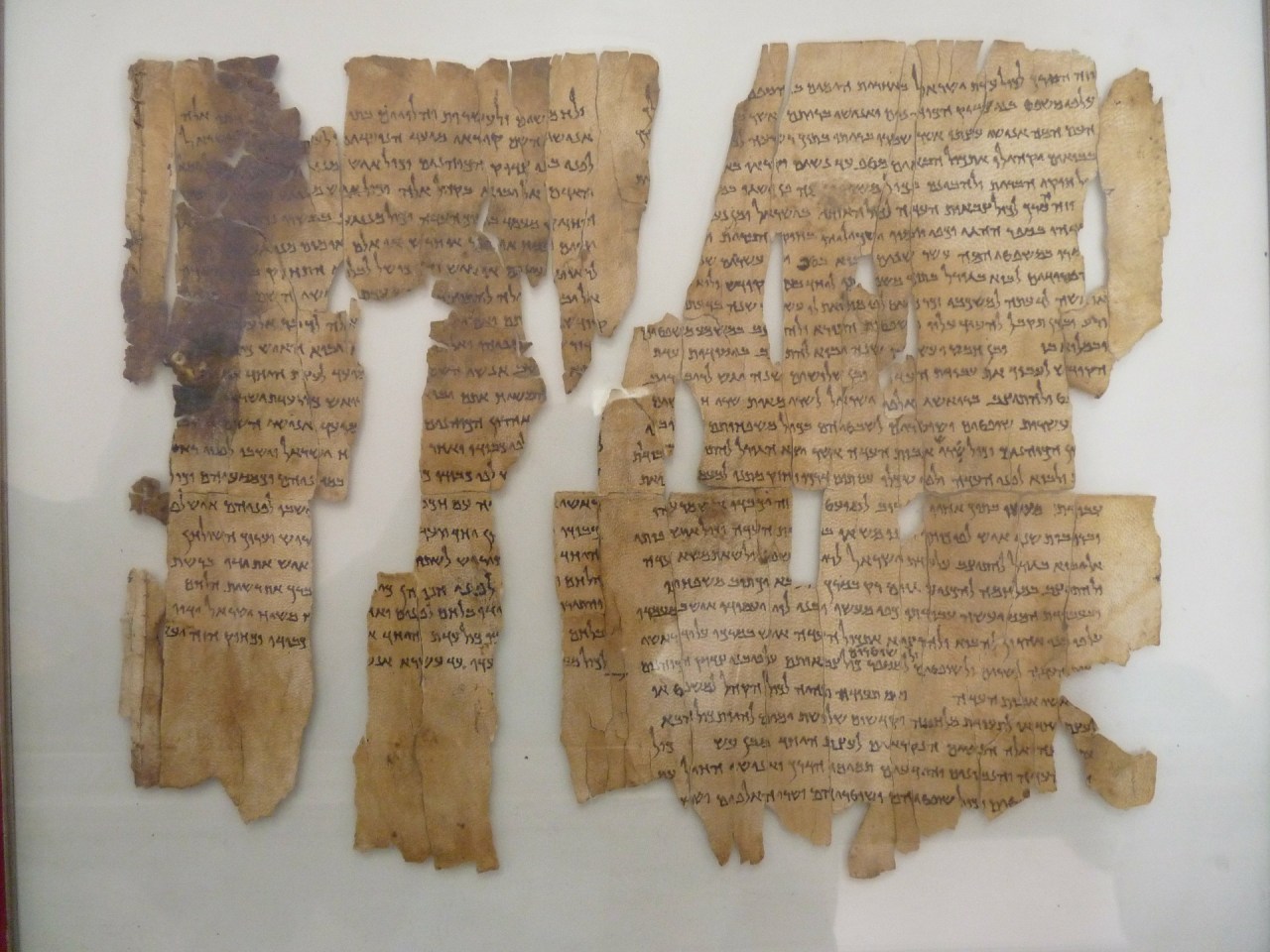
Jesus and the Historical Method – Part 5

This article picks up where the last article left off. We continue our glimpse at the early testimony for Jesus of Nazareth.

The Argument for the Early Dating of the Synoptic Gospels

The Gospels of Matthew, Mark, and Luke are all said to be the “Synoptic Gospels.”

“Synoptic” means that they are seen through the same eye. These three Gospels tell the story of Jesus in a familiar fashion. Some have claimed that the Gospels all should have been written after AD 70 due to a prophecy given that relates to the destruction of the Temple (occurring in AD 70). However, many scholars are beginning to change their mindset concerning these dates.

J. Warner Wallace makes a compelling argument, an argument held by some NT scholars, that all three Synoptic Gospels must have been written prior to AD 63. Wallace argues that “The New Testament fails to describe the destruction of the Temple…The New Testament fails to describe the siege of Jerusalem [70 A.D.]…Luke said nothing about the deaths of Paul and Peter…Luke said nothing about the death of James [62 A.D.]…Luke’s Gospel predates the Book of Acts…Paul quoted Luke’s Gospel in his letter to Timothy.”[1]

Therefore, since Acts is the sequel to the Gospel of Luke and does not mention the details that Wallace has noted, then it only stands to reason that Acts was written before AD 64 with Luke being written sometime prior to Acts. Since Luke uses Mark and Matthew, then it is feasible to claim that Mark and Matthew predate the writing of Luke. If Wallace is correct, then the Synoptic Gospels were all composed within 30 years of the crucifixion of Jesus of Nazareth. It would be comparable to currently writing about an event that transpired in 1986. With several eyewitnesses and with fond memories of the 80s, one could write a trustworthy account within that timeframe.

Even if one is not persuaded by Wallace’s argument, suffice it to say that there exist several early traditions in the Gospel texts that predate the NT. Even with the Gospel of John which is normally attributed to the late first-century, many scholars—including some liberal ones—hold that John reports traditions that fit well within the early the time of Christ. This includes the inclusion of a miracle by Jesus at one Pool of Bethesda. The Pool of Bethesda was destroyed prior to AD 70.[2]

Earliest New Testament Letters

  1. Galatians

In addition to the previously listed material, one should note that many of the epistles listed in the New Testament canon are considered early. Consider the Paul’s letter to the Galatians. Gerald Peterman writes concerning Galatians that “Probably the letter should be dated to AD 49…Paul came to Christ probably around AD 35 and the events described in Gal 2:1-10 must have occurred before the letter was written. Therefore, the reference to ‘fourteen years’ (2:1) must be all-inclusive—that is, the ‘three years’ previously mentioned (1:18) plus 11 more. This yields AD 49 (35+14).”[3]

 2. James

The letter of James is another early manuscript. While some date the letter to the latter first-century, an idea based upon the skepticism that James, the half-brother of Jesus, would not pen a work; many Bible scholars hold that James not only was written by the authentic James, the half-brother of Jesus, but that the work was extremely early.

Kurt A. Richardson writes that “If the epistle’s author is James the Lord’s brother, then it was written before a.d. 62, perhaps in the previous decade. James is the only likely candidate for authorship, as, indeed, Christian tradition has affirmed.[4] John F. Hart takes the date a step further. Hart holds that James was written extremely early since that the Epistle of James does not indicate any reference to the Jerusalem Council. Thus, Hart notes that “If the book was written before the Jerusalem Council (AD 49), the date of writing could be as early as AD 45-48 (most evangelicals). If the dispersion in 1:1 refers to the scattering of Jewish believers in Ac 8:1, dated at about AD 34, the book could have been written as early as AD 35-36. James is probably the first NT book written.”[5]

If Hart is correct, then we have a reference to Jesus of Nazareth, that is “the Lord Jesus Christ” (James 1:1), as early as 2-5 years from the time that Jesus of Nazareth was crucified and resurrected!

3.  1 Thessalonians

1 Thessalonians is another work that provides early testimony to Jesus of Nazareth. 1 Thessalonians, like Galatians, Romans, and the Corinthian letters, is one of the letters universally attested to Paul. 1 Thessalonians, the book that provides the eschatological concept of the Parousia, was most likely written around AD 51, a mere 18-21 years from the crucifixion and resurrection of Jesus of Nazareth. Kevin D. Zuber denotes that “Paul probably arrived before Gallio began his tenure in AD 50. He probably wrote 1 Thessalonians in early AD 51 and 2 Thessalonians later that same year. Although these two letters are among the earliest of Paul’s ‘canonical correspondence’ (only Galatians is earlier), the themes and issues reflect a mature faith and a consistency of doctrine.”[6]

 Conclusion

This article has only scratched the surface of early testimony that one finds for Jesus of Nazareth. No other person in all of antiquity holds the early reliable testimony that Jesus of Nazareth enjoys. Those who are skeptical of the Christian faith may not accept the claims made about Jesus of Nazareth. However, if one is to be honest with the evidence, then one must admit that not only was Jesus of Nazareth an authentic person of history, but also that He was crucified and was thought to have resurrected from the dead from the outset of the Christian movement.

This evidence holds such power that it was used by God not only to bring Pastor Brian back to a strong Christian faith, but also led him back into the Gospel ministry. For me, it stopped me from becoming Muslim. It grounded my Christian faith on the evidence I never knew we had as Christians.

Thus far, Jesus of Nazareth has passed the historical test with flying colors. Will Jesus continue to pass the historical test when we investigate eyewitness testimony?

© January 25th, 2016. Brian Chilton.


Bibliography

 Albright, W. F. Recent Discoveries in Bible Lands. New York: Funk & Wagnalls Company, 1955.

Habermas, Gary. The Historical Jesus: Ancient Evidence for the Life of Christ. Joplin, MO: College Press, 1996.

Licona, Michael R. The Resurrection of Jesus: A New Historiographical Approach.Downers Grove; Nottingham, UK: IVP Academic; Apollos, 2010.

Richardson, Kurt A. James. The New American Commentary. Volume 36. Nashville: Broadman & Holman Publishers, 1997.

Rydelnik, Michael, and Michael Vanlaningham, eds. The Moody Bible Commentary.Chicago: Moody Publishers, 2014.

Wallace, J. Warner. Cold-case Christianity: A Homicide Detective Investigates the Claims of the Gospels. Colorado Springs: David C. Cook, 2013.

Endnotes 

 [1] J. Warner Wallace, Cold-case Christianity: A Homicide Detective Investigates the Claims of the Gospels (Colorado Springs: David C. Cook, 2013), 161-163.

[2] In the 19th century, many scholars dismissed the Gospel of John as a late invention over this Pool of Bethesda. That is, until the Pool of Bethesda was excavated and discovered in the late 19th to early 20th century.

[3] Gerald Peterman, “Galatians,” in The Moody Bible Commentary, Michael Rydelnik and Michael Vanlaningham, eds (Chicago: Moody Publishers, 2014), 1827.

[4] Kurt A. Richardson, James, vol. 36, The New American Commentary (Nashville: Broadman & Holman Publishers, 1997), 39.

[5] John F. Hart, “James,” in The Moody Bible Commentary, Michael Rydelnik and Michael Vanlaningham, eds (Chicago: Moody Publishers, 2014), 1947.

[6] Kevin D. Zuber, “1 Thessalonians,” in The Moody Bible Commentary, Michael Rydelnik and Michael Vanlaningham, eds (Chicago: Moody Publishers, 2014), 1877

Jesus – Son of Man, Son of God, Son of David

When it comes to messianic expectations at the time of Jesus, Christians can be unaware that other names were used to describe the messianic person other than the “Messiah.”

Two of these names are “Son of God” and “Son of Man.”

The “Son of Man” (bar nash, or bar nasha) expression is seen in Jesus’ earthly ministry (Mk. 2:10,28; 10:45; Matt. 13:37). But even in His earthly ministry, Jesus speaks of His authority on earth because the Son of Man has received his authority from God in heaven (as depicted in Dan. 7:9–14). For example, Jesus says to the scribes who question His presumption in declaring the paralyzed man’s sins forgiven: “… that you may know that the Son of Man has authority on earth to forgive sins” (Mk. 2:10). 1

Having received His authority from heaven, Jesus now exercises it in His ministry on earth. Even authoritative claims such as, “the Son of Man is lord even of the Sabbath” (Mk 2:28) would cause a Jewish hearer to remember that God is the only one who commanded his people to respect it (Exod. 20:8–11).2 While Son of Man is used to refer to the the suffering, death, and and resurrection of Jesus (Mk. 8:31;9:31;10:33), it also refers to eschatological judgment (Matt. 25:31-36; Mk.14:60-65).

Jesus spoke of this function in the following texts:

When the Son of Man comes in His glory, and all the angels with him, then He will sit on his glorious throne. Before Him will be gathered all the nations , and He will separate them one from another as a shepherd separates the sheep from the goats, and He will place the sheep at his right hand, but the goats at the left. Then the King will say to those at his right hand, ‘Come, O blessed of my Father , inherit the kingdom prepared for you from the foundation of the world…’ Then He will say to those at his left hand, ‘Depart from me, you cursed, into the eternal fire prepared for the devil and his angels….’ And they will go away into eternal punishment, but the righteous into eternal life (Matt. 25: 31-36).

You, who have persevered with me in my tribulations, when the Son of Man sits upon his glorious throne will also sit upon thrones, judging the twelve tribes of Israel (cf. Matt. 19: 28; Lk. 22: 28-30).

One of the most pertinent issues is Jesus’ use of Son of Man in the trial scene in Mark 14.

We DO NOT want to minimize why Jesus earned the charge of blasphemy here.

According to Jewish law, the claim to be the Messiah was not a criminal or capital offense. If this is true, why was Jesus accused of blasphemy? Jesus affirmed the chief priest’s question that He was not only the Messiah but also the Coming Son of Man who would judge the world and would sit at the right hand of God.

This was considered a claim to deity since the eschatological authority of judgment was for God alone. Hence, Jesus provoked the indignation of his opponents because of His application of Daniel 7:13-14, and Psalm 110:1 to Himself. Let’s look at Daniel 7:13-14

I saw in the night visions, and behold, with the clouds of heaven there came one like a Son of Man, and He came to the Ancient of Days and was presented before Him. And to Him was given dominion and glory and a kingdom, that all peoples, nations, and languages should serve him; his dominion is an everlasting dominion, which shall not pass away, and his kingdom one that shall not be destroyed.

In this text, the figure is given a rule over God’s kingdom. All people groups are seen as seen as serving and worshiping this figure. Yet, in some sense the figure is divine yet in human form who is a second divine figure who reigns alongside the Ancient of Days (the term for God in the text).

Son of God and Son of David

When it comes to the question as to whether Jesus is the Messiah, both Christians and Jewish people agree that the Messiah has to be a descendant of David. The area of disagreement is when Christians make the claim that Jesus is the divine, Son of God. What Christians tend to forget is that when Jewish people think of the Davidic King as the Son of God, it has very little to do with thinking the Son of God is the second person of the Trinity.

In other words, at the time of Jesus, “Son of God” didn’t necessarily denote divinity. Even though divine sonship appears in the Jewish Scriptures with regards to persons or people groups such as angels (Gen 6:2; Job 1:6; Dan 3:25), and Israel (Ex. 4:22-23; Hos 11;1; Mal. 2:10), the category that has special importance to the Son of God issue is the Davidic king. While God promised that Israel would have an earthly king (Gen. 17: 6; 49:6; Deut.17: 14-15), he also promised David that one of his descendants would rule on his throne forever (2 Sam.7:12-17; 1 Chr.17:7-15). In other words, David’s line would eventually reach it’s climax in the birth of a person who would guarantee David’s dynasty, and throne forever.

In Psalm 2 which is a coronation hymn, (similar to 2 Kings 11:12) is the moment of the king’s crowning. God tells the person to whom He is speaking that He is turning over the dominion and the authority of the entire world to Him (v 8). While David did have conquest of all the nations at that time, (Edom, Moab, Ammon, Philistia, Amalek, etc-1 Chron. 14:17; 18:11) in Psalm 2, one day God will subjugate all the nations to the rule of the Davidic throne.3

In Psalm 89, the Davidic King is elevated over the rivers and seas (v.24- 25) and is the most exalted ruler on earth (v. 27). He also will be the “firstborn” and enjoy the highest rank among all earthly kings. In Psalm 110, the Davidic King is invited to sit at God’s “right hand” (vs.1) and his called called “lord” (vs.1) and called a “priest” after the pattern of Melchizedek.

Keeping this in mind, let’s look at Romans 1:1-5

Paul, a bond-servant of Christ Jesus, called as an apostle, set apart for the gospel of God, which He promised beforehand through His prophets in the holy Scriptures, concerning His Son, who was born of a descendant of David according to the flesh, who was declared the Son of God with power by the resurrection from the dead, according to the Spirit of holiness, Jesus Christ our Lord, through whom we have received grace and apostleship to bring about the obedience of faith among all the Gentiles for His name’s sake, among whom you also are the called of Jesus Christ; to all who are beloved of God in Rome, called as saints:Grace to you and peace from God our Father and the Lord Jesus Christ.”

In this text, Paul says through the resurrection, Jesus is installed (by God) as the Son of God (Rom. 1:4). Paul is not saying Jesus is being appointed as The Son of God is a change in Jesus’ essence. Thus, Jesus is “designated” or “declared” as the Son of God, the Lord—the anti-type of the previous “sons” in the Old Testament (Adam, David, Israel).”4 Paul’s goes on to reference Jesus as the incarnate Son who dies and is raised from the dead (see Rom. 5:10; 8:3, 29, 32; Gal. 1:16; 4:4–6; Col. 1:13; 1 Thess. 1:10).

To summarize, Jesus did consider Himself to be both the unique Son of God and the Son of Man. When we understand the cultural context of these names for the Messiah, it becomes evident that Jesus is both divine and human. Because of this, He is the only one who can provide both atonement for our sins as well as a covenantal relationship with God through his death and resurrection.

REMEMBER THIS WHEN YOUR MUSLIM FRIENDS TELL YOU JESUS NEVER CLAIM TO BE DIVINE, OR THAT THE NEW TESTAMENT NEVER PORTRAYS JESUS AS GOD.


1.Craig A Evans, From Jesus to the Church: The First Christian Generation (Louisville, Westminster John Knox Press, 2014), 49.

2.Ibid.

3. Herbert W. Bateman IV, Darrell L. Bock, and Gordon H. Johnston, Jesus the Messiah: Tracing The Promises, Expectations, And Coming of Israel’s King ( Grand Rapids: Kregel Academic, 2012), 80.

4. C.W Morgan and R.A. Peterson, Theology in Community: The Deity of Christ(Wheaten: Crossway, 2011), 119.

Jesus and the historical Method – Part 4

This fourth article confronts an issue that many skeptics present concerning one’s knowledge of the historical Jesus: early testimony.

Early testimony is important because the closer a text is to the events that it describes, the more reliable the testimony. Longer spans of time allows for the introduction of legendary material (i.e Muhammad’s version of what happened to Jesus). Early testimony allows for correction among historical records and other eyewitnesses who can corroborate or deny the details presented by a text (Muhammad lived 600 years after Jesus – he was not an eye witness).

Some people are skeptical to the dating of some New Testament texts. Part of this skepticism stems from extreme liberal beliefs concerning the biblical texts originating from textual criticism gone wild. However, unbeknownst to many, such skepticism is far from unanimous in biblical scholarship. In fact, the scholarly world is coming to the understanding that the texts of the New Testament may be much earlier than previously anticipated. In fact, two radical scholars, John A. T. Robinson and W. F. Albright, have accepted an early dating for the New Testament writings.

Albright noted that “We can already say emphatically that there is no long any basis for dating any book of the New Testament after about A.D. 80, two full generations before the date between 130 and 150 given by the more radical New Testament critics of today.”[1]

This article will not address every early document that we have pertaining to Jesus of Nazareth. Rather, this article will examine some of the earliest testimonies we have pertaining to Jesus of Nazareth. We will begin with, perhaps, the most important testimony we possess.

Pre-New Testament Traditions

Throughout the New Testament, one finds early Christian documentations that predate the New Testament writings. These documentations date to the earliest times of the church.

Habermas notes that “It is crucially important that this information is very close to the actual events, and therefore cannot be dismissed as late material or as hearsay evidence. Critics not only admit this data, but were the first ones to recognize the early date.”[2]

Several of these early traditions are documented throughout the New Testament writings. It is important to note that these traditions date to the earliest church. For your consideration, I have attached a formulation (listing out key historical events), a hymn (a song relating theological information), and a confession (listing out a statement to be said in confessing a belief).

  1. Formulation in   1 Corinthians 15:3-8

In this formulation, perhaps one of the most important historical pre-NT traditions, Paul relates what he received when he first became a Christian and met with the apostles. This is what Paul records:

“For I delivered to you as of first importance what I also received: that Christ died for our sins in accordance with the Scriptures, that he was buried, that he was raised on the third day in accordance with the Scriptures, and that he appeared to Cephas, then to the twelve. Then he appeared to more than five hundred brothers at one time, most of whom are still alive, though some have fallen asleep. Then he appeared to James, then to all the apostles. Last of all, as to one untimely born, he appeared also to me.”[3]

In this formulation, one will note the emphasis placed upon Jesus’ crucifixion, resurrection, and resurrection appearances. This tradition provides HUGE historical support for resurrection claim.

2. Hymn: Philippians 2:6-11

In his letter to the Church of Philippi, Paul recounts an early hymn that predates his writing. This hymn records several important Christian beliefs pertaining to Christ.

“who, though he was in the form of God, did not count equality with God a thing to be grasped, but emptied himself, by taking the form of a servant, being born in the likeness of men. And being found in human form, he humbled himself by becoming obedient to the point of death, even death on a cross. Therefore God has highly exalted him and bestowed on him the name that is above every name, so that at the name of Jesus every knee should bow, in heaven and on earth and under the earth, and every tongue confess that Jesus Christ is Lord, to the glory of God the Father” (Philippians 2:6-11).

Here again, one will find early testimony for the crucifixion of Christ and implicitly for the resurrection. Also of great importance is the early attribution of divinity that the church placed upon Jesus of Nazareth.

3. Confession:     Romans 10:9

To the Church of Rome, Paul provides an early confession that predates his writing. Paul notes that “If you confess with your mouth that Jesus is Lord and believe in your heart that God raised him from the dead, you will be saved” (Romans 10:9). Paul’s confession notes, again, the death and resurrection of Jesus.

These early testimonies are so important that NT historian Michael Licona noted that “Paul and the oral traditions embedded throughout the New Testament literature provide our most promising material.”[4] Therefore, these traditions which number far more than the three listed are of extreme value to the historicity of Jesus of Nazareth.


So much information was compiled by Pastor Brian for the early testimony of Jesus that the article had to be broken into two sections. Next week, his examination of early testimony will continue as we take a look at the dating of the Gospels and the three earliest Epistles in the New Testament.

For my own writing’s sake, I just want to address one more thing  – although I am almost sure Pastor Brian will mention it. These early testimonies are EXTREMELY important when it comes to Muslim-Christian apologetics. There’s a myth surrounding the apostle Paul.

He is charged by the Muslims to have made Jesus into a God. The Gospels – according to Muslim apologists – never show Jesus as God (never mind Jesus saying He is the Son of Man of Daniel 7, or Jesus receiving worship by Thomas and not rebuking him, among other examples).

If someone is to blame, it has to be Paul. There’s an excellent debate here on who gives us the truth about Jesus – Paul or Muhammad?

But the datings of this early testimonies are extremely important. The book of Romans, for example, was written around A.D. 57. Phillipians was written around A.D. 62, and 1 Corinthians around A.D. 53-55. Why is this important? It is important because this means that the disciples of Jesus were alive when Paul wrote his letters to the different churches.

The Gospel of Matthew was written in the late 50s or early 60s. The Gospel of Mark – although not a disciple of Jesus, but a friend of Peter – was written in the late 50s. The Gospel of Luke was written by a physician (and Paul’s companion) sometime before A.D. 65. The Gospel of John was written between A.D. 70-100.

All the people associated with Jesus – the eyewitnesses – were still alive by the time Paul’s letters were in circulation. Galatians was written in A.D. 48. Colossians, Philemon and Ephesians were written around the same time of Phillipians – A.D. 62. Besides all this, the epistles mention the other apostles. Paul  knew Peter and James personally (Galatians 1).

If Paul was making all this stuff up, CERTAINLY the disciples would have said something. Don’t you think?

Jesus’ own brother James wrote his letter around A.D. 40-45 – way before Paul’s writings. And seriously, what did it take for James to accept that his half-brother was actually God in the flesh? James turned from being a skeptic to a leader in the church based on his meeting with the resurrected Christ.

My point is this: Paul did not make up the divinity of Jesus. Everybody who knew Jesus personally was still alive, and could have called Paul out on this, but they didn’t. Why? Because Paul was telling the truth even before the synoptic gospels were written.

Stay tuned for next week 🙂

 Bibliography for Complete Article

Albright, W. F. Recent Discoveries in Bible Lands. New York: Funk & Wagnalls Company, 1955.

Habermas, Gary. The Historical Jesus: Ancient Evidence for the Life of Christ. Joplin, MO: College Press, 1996.

Licona, Michael R. The Resurrection of Jesus: A New Historiographical Approach. Downers Grove; Nottingham, UK: IVP Academic; Apollos, 2010.

Richardson, Kurt A. James. The New American Commentary. Volume 36. Nashville: Broadman & Holman Publishers, 1997.

Rydelnik, Michael, and Michael Vanlaningham, eds. The Moody Bible Commentary. Chicago: Moody Publishers, 2014.

Wallace, J. Warner. Cold-case Christianity: A Homicide Detective Investigates the Claims of the Gospels. Colorado Springs: David C. Cook, 2013.

Endnotes

[1] W. F. Albright, Recent Discoveries in Bible Lands (New York: Funk & Wagnalls Company, 1955), 136.

[2] Gary Habermas, The Historical Jesus: Ancient Evidence for the Life of Christ (Joplin, MO: College Press, 1996), 30.

[3] Unless otherwise noted, all Scripture comes from the English Standard Version (Wheaton: Crossway, 2001).

[4] Michael R. Licona, The Resurrection of Jesus: A New Historiographical Approach (Downers Grove; Nottingham, UK: IVP Academic; Apollos, 2010), 275.

Jesus and the Historical Method – Part 3

This week, Pastor Brian discusses a third historical method that helps historians determine the historicity of an event – embarrassing admonitions.

Gary Habermas and Michael Licona write that “an indicator that an event or saying is authentic occurs when the source would not be expected to create the story, because it embarrasses his cause and ‘weakened its position in arguments with opponents’[1].”[2]

In other words, if a person provides information that would harm his or her cause, then the claims adds to the historical certainty that such an event took place or that such a statement was spoken.

A member at one of my former pastorates gave a great example of this method. He told of a pastor who told his congregation that he was too busy to visit the sick. Then a few sentences later, he had spoken on how he had been playing golf on multiple occasions that week. Such a statement was embarrassing for the pastor and, therefore, increases the reliability that such a statement was given.

When it comes to the early church, seven examples serve as embarrassing admonitions. While others exist, these five relate especially to the core movement of the church.

huh

  1. Disciples’ Inability to Understand Message.

If a movement desires to instill the reliability of its advocates, the movement will not present the leaders as ignorant. With the New Testament, the apostles are presented several times as ignorant as to the message presented by Jesus until Jesus explained the message to them at a later point. For instance, Luke records the following,

“And taking the twelve, [Jesus] said to them, ‘See, we are going up to Jerusalem, and everything that is written about the Son of Man by the prophets will be accomplished. For he will be delivered over to the Gentiles and will be mocked and shamefully treated and spit upon. And after flogging him, they will kill him, and on the third day he will rise.’ But they understood none of these things. This saying was hidden from them, and they did not grasp what was said” (Luke 18:31-34).[3]

Some might claim, “Then how can we trust the disciples with the message of Christ if they did not understand?” Well, John explains that Jesus’ disciples did not understand these things at first, but when Jesus was glorified, then they remembered that these things had been written about him and had been done to him” (John 12:16). That the disciples would include their ignorance verifies the historicity of Jesus’ teachings (at least in part) and their misunderstandings.

questionmark

  1. Jesus’ Ignorance of Certain Events.

It is unheard of that the disciples would elevate Jesus as the Son of God and then document that Jesus did not know a particular thing. Yet, this is what happened with the Evangelists. Jesus is noted as saying, pertaining to the return of Christ at the end of time, that concerning that day or that hour, no one knows, not even the angels in heaven, nor the Son, but only the Father” (Mark 13:32). Such a statement fits an embarrassing admonition, thus verifying its authenticity.

garden of gethsemane.gif

  1. Jesus’ Fear in Facing the Cross.

If someone is building up a fictional hero, the writer is unlikely to include bouts of fear especially if the hero is noted for his/her courage. Yet, on the evening before facing the cross, Jesus “being in an agony he prayed more earnestly; and his sweat became like great drops of blood falling down to the ground” (Luke 22:44). Such a bout of agony could be demonstrated to be an embarrassing admonition, thereby verifying Jesus’ time of prayer in the Garden of Gethsemane.

peter-denies-christ-bloch-carl_1167438_inl

  1. Cowardice of Key Leaders.

Another admonition that would have been embarrassing for the early Christian movement was the claim that the early church leaders, even those of prime importance, fled when Jesus was tried.[4] Consistently, the four canonical Gospels indicate that the male disciples fled while the women remained with Jesus.[5]Women were also listed as prominent disciples in the early church movement (Rom. 16:1-3, 7, 12; Phil. 4:2-3; 1 Cor. 16:19).

 In a patriarchal society (where men are elevated and women minimalized), is this something you would want to promote if it were not true??? Would you really want people to know that the women were brave while you were a coward???

 joseph_arimathea

  1. Joseph of Arimathea’s Burial of Jesus.

Mark, generally held to be the earliest Gospel, notes that one Joseph of Arimathea “a respected member of the council, who was also himself looking for the kingdom of God, took courage and went to Pilate and asked for the body of Jesus…And when he [Pilate]learned from the centurion that he was dead, he granted the corpse to Joseph” (Mark 15:43, 45).

Now, Jesus had been condemned by the Sanhedrin. Joseph of Arimathea was a member of the Sanhedrin. Thus, the burial of Jesus was embarrassing for the church as it would claim that the disciples could not even provide a decent burial. It would take one from the very council that condemned Jesus to give Jesus a proper burial.

 women.jpg

  1. Testimony of Women.

Habermas notes that “The Gospels are unanimous in their claim that women were the earliest witnesses to the empty sepulcher (Mt 28:1-10; Mk 16:1-8; Lk 24:1-9; Jn 20:1-2). This is a powerful indication of the authenticity of the report, since a woman’s testimony was generally disallowed in a law court, especially on crucial matters.”[6]

We already noted how that first-century Palestine, as well as the rest of the Greco-Roman society, was patriarchal in scope. Lesley DiFrancisco notes that In the patriarchal societies characteristic of this time, men had social, legal, and economic power. Although women could achieve some status through marriage and motherhood, they were often dependent on men.”[7]

Here again, it would not make sense to have the women as the first witnesses of the resurrected Christ unless it actually took place in that fashion.

thomas-2

  1. Doubt of Some Pertaining to Jesus’ Resurrection.

Finally, if one were to invent the Christian story, then one would show that everyone saw and believed without reservation. However, the Gospels show that even after Jesus had risen from the dead, some doubted. Matthew writes that “when they saw him they worshipped him, but some doubted” (Matthew 28:17). Luke notes that the women had seen Jesus but the male disciples refused their testimony seeing it as an “idle tale” (Luke 24:10-11). Who could forget of one “Doubting Thomas” who later became “Believing Thomas” (John 20:24-29)? The fact that some disciples doubted the report could be seen as an embarrassing admonition for the early church.

Conclusion

Several other embarrassing admonitions could be added to the seven listed above. However, one should note the great weight of authenticity that comes from these embarrassing admonitions. No one likes to be embarrassed. No one! Thus, we must ask, does Jesus pass the third historical test found in embarrassing admonitions?

YES!!!

So far, Jesus of Nazareth and the early Christian movement have stood strong with the historical methodology employed. But, we are not done yet. Next week, we will examine the fourth aspect of the historical method: early testimony.

Just how early are the sources that we possess? Join Pastor Brian next week 🙂

© January 11, 2016. Brian Chilton.


Bibliography

DiFrancisco, Lesley. “Women in the Bible, Mistreatment of,” The Lexham Bible Dictionary. Edited by John D. Barry, et al. Bellingham, WA: Lexham Press, 2015. Logos Bible Software.

Habermas, Gary R. Habermas, and Michael R. Licona. The Case for the Resurrection of Jesus. Grand Rapids: Kregel, 2004.

Habermas, Gary R. Habermas, The Risen Jesus & Future Hope. Lanham, MD: Rowman & Littlefield, 2003.

Meier, John P. A Marginal Jew: Rethinking the Historical Jesus. Volume 1. New York: Doubleday, 1991-2001. In Gary R. Habermas and Michael R. Licona. The Case for the Resurrection of Jesus. Grand Rapids: Kregel, 2004.

Endnotes

 [1] John P. Meier, A Marginal Jew: Rethinking the Historical Jesus, Volume 1 (New York: Doubleday, 1991-2001), 168 in Gary R. Habermas and Michael R. Licona, The Case for the Resurrection of Jesus (Grand Rapids: Kregel, 2004), 38.

[2] Gary R. Habermas and Michael R. Licona, The Case for the Resurrection of Jesus(Grand Rapids: Kregel, 2004), 38.

[3] Unless otherwise noted, all Scripture comes from the English Standard Version(Wheaton: Crossway, 2001).

[4] E.g. Matthew 26:69-75.

[5] A couple of examples of the women’s faithfulness are seen in Matthew 27:55-56 and John 19:24b-27.

[6] Gary R. Habermas, The Risen Jesus & Future Hope (Lanham, MD: Rowman & Littlefield, 2003), 23.

[7] Lesley DiFransico, “Women in the Bible, Mistreatment of,” The Lexham Bible Dictionary, ed. John D. Barry et al. (Bellingham, WA: Lexham Press, 2015), Logos Bible Software.

Jesus and the HIstorical Method – PArt 2

In his last installment of “Examining Jesus by the Historical Method,” Pastor Brian discussed the first aspect of the historical method. He examined how Jesus of Nazareth enjoys documentation by a variety of independent sources, something that is important for both the historian and the detective.

This article will discuss the second method by which a person and/or event of history is scrutinized—enemy attestation.

Gary Habermas and Michael Licona note that “If testimony affirming an event or saying is given by a source who does not sympathize with the person, message, or cause that profits from the account, we have an indication of authenticity.[1]

Here’s why this is so important: if a person’s mother said that her child had integrity, one could claim the mother spoke out of bias for her child. But what if the person’s enemy said that the person had integrity? The claim of integrity would hold greater weight.

The same is true of historical enemy attestation. The following are examples of enemy attestation as it pertains to Jesus of Nazareth. The writers of the texts you are going to read are not Christians and have no allegiance to the Christian church.

cornelius tacitus

  1. Roman historian Tacitus (Annals 15.44), c. 100AD.

In the late first-century, Roman historian Tacitus set out to write an account of the histories of Rome. When discussing the twisted emperor Nero, Tacitus briefly mentions Jesus and the band of followers known as the Christians. Tacitus’ comments are associated with Nero’s burning of Rome.

Tacitus writes,

Consequently, to get rid of the report, Nero fastened the guilt and inflicted the most exquisite tortures on a class hated for their abominations, called Christians by the populace. Christus, from whom the name had its origin, suffered the extreme penalty during the reign of Tiberius at the hands of one of our procurators, Pontius Pilatus, and a most mischievous superstition, thus checked for the moment, again broke out not only in Judaea, the first source of the evil, but even in Rome, where all things hideous and shameful from every part of the world find their centre and become popular. Accordingly, an arrest was first made of all who pleaded guilty; then, upon their information, an immense multitude was convicted, not so much of the crime of firing the city, as of hatred against mankind. Mockery of every sort was added to their deaths. Covered with the skins of beasts, they were torn by dogs and perished, or were nailed to crosses, or were doomed to the flames and burnt, to serve as a nightly illumination, when daylight had expired.[2]

From Tacitus, we can acquire that Jesus of Nazareth lived, died during the reign of Tiberius by the hands of Pontius Pilate, and was believed to have been resurrected (from Tacitus’ claim of one “mischievous superstition”). One also can acquire the great devotion of the early Christians from Tacitus’ text.

josephus

2. Jewish historian Josephus (Antiquities 18.3), c. 90AD.

Josephus was not a Christian, but was a Jewish historian. Josephus was also a Roman sympathizer. Since Josephus was not a believer, this has led some to dismiss Josephus’ reference to Jesus. However, Josephus mentions Jesus and Jesus’ brother – James – in other places of his work.

Many have noted that the reference is legitimate, but may have originally left out the part where the historian refers to Jesus as “the Christ.” While the exact wording is debated, the reference is authentic.

Josephus writes,

Now, there was about this time Jesus, a wise man, if it be lawful to call him a man, for he was a doer of wonderful works—a teacher of such men as receive the truth with pleasure. He drew over to him both many of the Jews, and many of the Gentiles. He was [the] Christ; and when Pilate, at the suggestion of the principal men amongst us, had condemned him to the cross, those that loved him at the first did not forsake him, for he appeared to them alive again the third day, as the divine prophets had foretold these and ten thousand other wonderful things concerning him; and the tribe of Christians, so named from him, are not extinct at this day.[3]

From Josephus, we can know that Jesus lived, was considered to be wise, was condemned by Pontius Pilate, was crucified on a cross, died, and that his disciples believed him to have been raised from death.

Talmud1.jpg

3. Talmud (Sanhedrin 43a), c. 220AD but reports an earlier tradition.

The Babylonian Talmud contains a tradition that was handed down from a previous source. While there are some differences in this account than the Gospel record (for instance, the Talmud only records 5 disciples), the general facts about Jesus (or Yeshu) are the same.

Sanhedrin 43a reads,

There is a tradition (in a Barraitha): They hanged Yeshu on the Sabbath of the Passover. But for forty days before that a herald went in front of him (crying), “Yeshu is to be stoned because he practiced sorcery and seduced Israel and lead them away from God. Anyone who can provide evidence on his behalf should come forward to defend him.” When, however, nothing favorable about him was found, he was hanged on the Sabbath of the Passover.[4]

Notice that this is not a source friendly to Jesus. Even still, one can demonstrate the hostility to Jesus from the religious authorities, the crucifixion of Jesus, and even the working of miracles (attributed as sorcery in this reference). Also, one notes that Jesus, in accordance with the Gospel record, was hung on the cross near the time of Passover.

mara bar serapion.jpg

4. Mara Bar-Serapion, c. 73-100AD.

At some point after 70AD, Syrian and Stoic philosopher Mara Bar-Serapion wrote of the importance of a person’s pursuit of wisdom. In doing so, Serapion compares Jesus (ie. The “wise king” to Socrates and Pythagoras.

Serapion writes,

What are we to say when the wise are forcibly dragged by the hands of tyrants and their wisdom is deprived of its freedom by slander, and they are plundered for their superior intelligence without the opportunity of making a defence? They are not wholly to be pitied.

         What advantage did the Athenians gain from putting Socrates to death? Famine and plague came upon them as a judgment for their crime. What advantage did the men of Samos gain from burning Pythagoras? In a moment their land was covered with sand. What advantage did the Jews gain from executing their wise king? It was just after that that their kingdom was abolished.

          God justly avenged these three wise men. The Athenians died of hunger; the Samians were overwhelmed by the sea; the Jews, ruined and driven from their land, live in complete dispersion. But Socrates did not die; he lived on in the teaching of Plato. Pythagoras did not die; he lived on in the statue of Hera. Nor did the wise king die; he lived on in the teaching which he had given.[5]

Thus, one can identify the wisdom that even Jesus’ adversaries found in the Nazarene. In addition, one can find that Jesus’ teachings were passed down by the early church.

5. Thallus (from Julius Africanus fragment), c. 52AD.

Julius Africanus quotes a now extant (meaning that it is lost) writing from a historian named Thallus. Africanus states that Thallus “wrote a history of the Eastern Mediterranean world from the Trojan War to his own time…Thallus, in the third book of his histories, explains away this darkness as an eclipse of the sun—unreasonably, as it seems to me (unreasonably, of course, because a solar eclipse could not take place at the time of the full moon, and it was at the season of the Paschal full moon that Christ died).”[6]

Thus, from Thallus one can note the darkness that surrounded Christ’s death.

6. Acts of Pilate (from Justin Martyr, First Apology 35), Justin wrote in the mid 2nd century but records a text from the first-century AD.

In his book the First Apology, Justin Martyr refers to a commonly known document known as the Acts of Pontius Pilate. Unfortunately, the document is now extant.

Nevertheless, Martyr writes,

And the expression, ‘They pierced my hands and my feet,’ was used in reference to the nails of the cross which were fixed in His hands and feet. And after He was crucified they cast lots upon His vesture, and they that crucified Him parted it among them. And that these things did happen, you can ascertain from the Acts of Pontius Pilate.[7]

The translators of the text add the following note, “These Acts of Pontius Pilate, or regular accounts of his procedure sent by Pilate to the Emperor Tiberius, are supposed to have been destroyed at an early period, possibly in consequence of the unanswerable appeals which the Christians constantly made to them.”[8]

Some may see this as a forgery. However, it is difficult to think so. Such ancient records could have been confirmed and/or denied. The fact that early Christians tended to appeal to this document would tend to verify its authenticity to some degree. This causes us to think that there may be more ancient resources available yet to be discovered that would further confirm the historical veracity of Jesus of Nazareth.

Conclusion

From the enemy attestation presented, the historian can know the following:

1) Jesus existed;

2) Jesus was a teacher from Judea;

3) Jesus was thought to have been wise;

4) Jesus performed miracles, although attributed to sorcery by his adversaries;

5) Jesus was crucified at the command of Pontius Pilate;

6) Darkness surrounded the area at Jesus’ crucifixion;

7) Jesus was crucified around the time of the Passover;

8) One can assume from the information given that Jesus was buried;

9) Jesus was believed to have been resurrected;

10) and Jesus’ followers accepted suffering and death while still holding on to the belief of Jesus’ resurrection.

From enemy attestation, one can know a great deal about the fundamentals of Jesus’ life.

Does Jesus pass the test of enemy attestation? YES!!!

The third test considers embarrassing admonitions. Will Jesus pass the third test?


Bibliography

Africanus, Julius. Chronography 18.1. In Josh McDowell. The New Evidence that Demands a Verdict. Nashville: Thomas Nelson, 1999.

Bar-Serapion, Mara. TextExcavation.com. Accessed January 4, 2016.http://www.textexcavation.com/marabarserapiontestimonium.html.

Habermas, Gary R., and Michael R. Licona. The Case for the Resurrection of Jesus. Grand Rapids: Kregel, 2004.

Josephus, Flavius, and William Whiston. The Works of Josephus: Complete and Unabridged.Peabody: Hendrickson, 1987.

Martyr, Justin. “The First Apology of Justin.” In The Apostolic Fathers with Justin Martyr and Irenaeus. The Ante-Nicene Fathers. Edited by Alexander Roberts, James Donaldson, and A. Cleveland Coxe. Buffalo, NY: Christian Literature Company, 1885.

Tacitus, Cornelius. Annals XV.44. The Internet Classics Archive. Translated by Alfred John Church and William Jackson Brodribb. Accessed January 4, 2016.http://classics.mit.edu/Tacitus/annals.11.xv.html.

Talmud. Sanhedrin 43a. JewishChristianLit.com. Accessed January 4, 2016.http://jewishchristianlit.com//Topics/JewishJesus/b_san43a.html#DIS.

 Endnotes

[1] Gary R. Habermas and Michael R. Licona, The Case for the Resurrection of Jesus (Grand Rapids: Kregel, 2004), 37-38.

[2] Tacitus, Annals XV.44, from The Internet Classics Archive, Alfred John Church and William Jackson Brodribb, trans, retrieved January 4, 2016,http://classics.mit.edu/Tacitus/annals.11.xv.html.

[3] Flavius Josephus and William Whiston, The Works of Josephus: Complete and Unabridged(Peabody: Hendrickson, 1987), Logos Bible Software.

[4] Talmud, Sanhedrin 43a, JewishChristianLit.com, retrieved January 4, 2016.http://jewishchristianlit.com//Topics/JewishJesus/b_san43a.html#DIS.

[5] Mara Bar-Serapion, TextExcavation.com, retrieved January 4, 2016.http://www.textexcavation.com/marabarserapiontestimonium.html.

[6] Julius Africanus, Chronography, 18.1, in Josh McDowell, The New Evidence that Demands a Verdict (Nashville: Thomas Nelson, 1999), 122.

[7] Justin Martyr, “The First Apology of Justin,” in The Apostolic Fathers with Justin Martyr and Irenaeus, ed. Alexander Roberts, James Donaldson, and A. Cleveland Coxe, vol. 1, The Ante-Nicene Fathers (Buffalo, NY: Christian Literature Company, 1885), 174–175.

[8] Ibid., 175, 1n.

What ‘Muslim’ Actually Means

I know Muslims who say they submit to the law of the land. Other Muslims I know think Sharia Law will solve all the problems around the world.

Who knows?

Clare M. Lopez gives a good perspective on the subject of what the word Muslim actually means in her article


TO BE OR NOT TO BE:

WHAT ‘MUSLIM’ ACTUALLY MEANS

The entire debate about what it means to be “Muslim” and Shariah-compliant might be solved with a quick lesson in Arabic grammar.

This is because the word Muslim contains in its Arabic meaning its own definition.

You see, the word Muslim in Arabic has two parts: the Mu prefix, and the triliteral root that forms the word Islam. That root word, Islam, is a verbal noun that means submission. When an Mu prefix is attached to such a root in Arabic, the resulting noun means: a person who does the thing that root word denotes.

Therefore, with Islam being a verbal noun meaning submission, Muslim therefore means one who submits.

Submits to what? To Allah’s will – which is Shariah. Islamic Law.

Thus, anyone who presents as a Muslim is by definition Shariah-adherent, because that’s what the word itself actually means. If someone claims to be a Muslim, or converts to Islam, or was born into Islam, but does not apostatize or separate from it, then it is reasonable to conclude that such a person is Shariah-compliant—at a minimum, tacitly—unless and until told otherwise. And the converse must also be true: one who does not submit to Shariah, one who does not adhere to Shariah, does not meet the linguistic definition of Muslim.

As for Shariah, which is defined and understood by the Islamic scholars to be an all-encompassing, legal-military doctrinal system that features some religious beliefs, it is binding for Muslims, even as the word Muslim dictates. Although Shariah includes a multitude of obligations, among which many are innocuous (to believe in the oneness of Allah; to pray five times per day; to avoid eating pork, etc.), jihad as warfare to spread Islam is also a core, compelling obligation. All who are Muslim by birth or conversion are obligated to actively support the establishment of a universal governmental system (Caliphate/Imamate) based on Shariah and the replacement by means of jihad of any political system not governed by Shariah.

It is this commandment to Islamic supremacism that is most problematic for non-Muslims and responsible for much of the debate about what exactly “being Muslim” means. But if we realize that the answer lies in the etymology of the Arabic word Muslim itself, then it will be understood that unless and until that identity as “one who submits” is abjured by the individual in question, the person is accorded full credit for living a Shariah-adherent life.


Look… I know a woman who told me she has had four miscarriages, and that her husband of eighteen years died of a silent heart attack. She’s Muslim. She remarried two years later. I think I’m her friend.

Unless she has some Machiavellian plan to get me to like her in order to convert me to Islam, I think she trusts me. And she trusts me because I am the only person she can relate to in a white-only-environment. I guess Muslims want to be my friends after all 🙂

I’m not even Muslim, but I know her culture and her religion. She feels safe talking to me. I have shown my love for her by asking her about her life. I have shown her the love of Jesus by just LISTENING to her.

Is she Sharia-compliant? Maybe. You know what, though? The Lord Jesus is after her heart. And I am honored to be the instrument that He might use to bring her HOME, and sweep her over her heels with a LOVE that she has never known.

To Isa al-Masih [Jesus the Messiah] be the glory for ever and ever. Amen.